Solar System Installation Sydney for a Brighter 2026
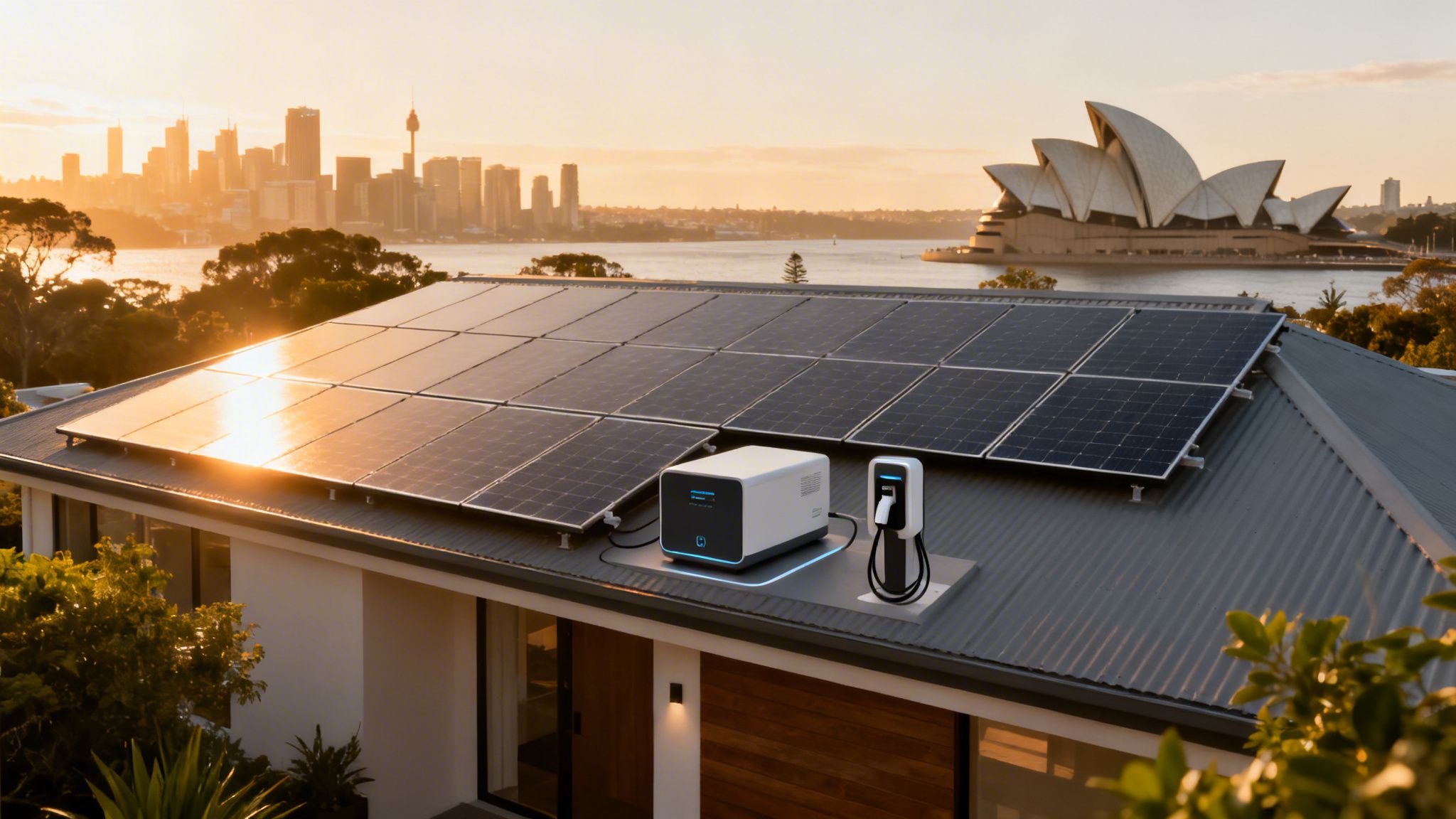
For most Sydney homeowners, going solar isn't just about being green anymore. It's a strategic move—a powerful investment in a complete home energy solution. The goal is to build your own personal energy ecosystem, with high-performance solar panels, solar batteries, and EV chargers all working together to secure your family's energy independence and financial future.
Why Sydney Is Embracing Solar Power In 2026
Let’s be honest, the constant dread of opening your quarterly electricity bill is a real concern for families across Sydney. A professionally designed solar power system is the most effective solution available. It transforms your home into a personal power station that generates, stores, and uses its own clean energy.
This simple shift dramatically cuts your reliance on the grid and delivers real, long-term financial freedom.
But a modern energy solution is so much more than just panels on a roof. It’s about integrating solar panels, battery storage, and EV charging so they work in harmony to give you maximum energy independence. It all starts with the sun, of course, but it ends with you powering your lights, your appliances, your battery, and even your car with clean, free energy.
This isn't a passive system; it turns your home into an active energy hub.
The diagram below shows exactly how this works—from the sun hitting your roof to the power flowing through your home.
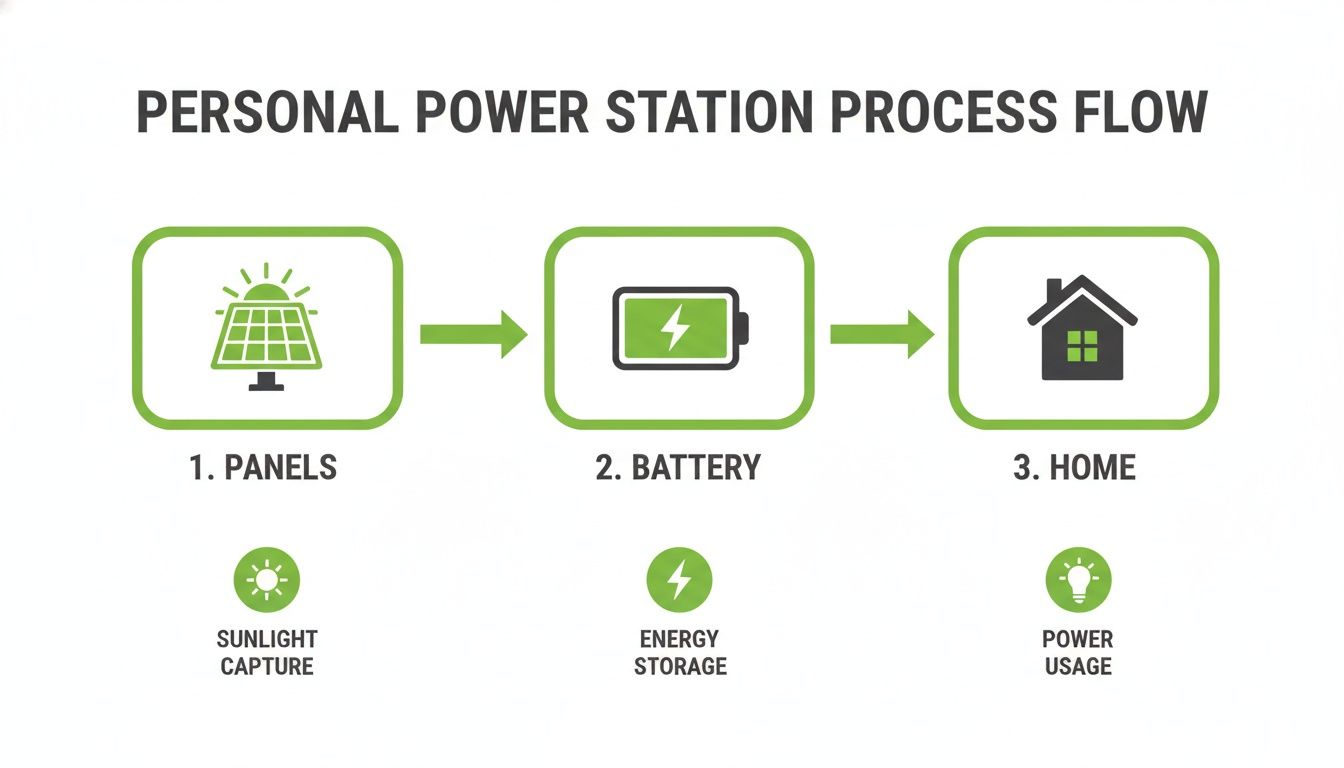
As you can see, the panels do the heavy lifting during the day, your battery stores any extra power for later, and your home draws on that stored energy at night or on cloudy days. Simple. Effective. Powerful.
The Shift Towards Energy Control
This move towards solar isn't some niche trend; it's a mainstream movement. Homeowners are tired of being powerless against rising costs and are actively investing in solutions that give them back control. A well-planned solar system installation in Sydney is the single most effective way to do it.
The benefits go far beyond just a lower power bill.
- Dramatically Reduced Electricity Bills: You generate most of the power you use, slashing what you need to buy from your retailer.
- True Energy Independence: With solar panels and a battery, you become far less vulnerable to the grid's unpredictable price hikes and supply issues.
- Future-Proofing Your Home: Your home is ready for the next wave of technology, especially the inevitable switch to electric vehicles.
- Increased Property Value: A quality solar, battery, and EV charging installation is a huge selling point for any potential buyer.
The numbers back this up. Solar uptake across Sydney has exploded, with data showing that roughly 25-30% of Sydney households now have solar systems installed. It's a clear signal that Sydneysiders are taking matters into their own hands to fight back against skyrocketing power bills.
Think of your solar system as your family's personal energy shield. It protects you from unpredictable price hikes and puts you in control, ensuring the lights stay on without the financial anxiety.
This guide will walk you through the entire process, step by step. By the time you're done, you'll have the confidence to invest in a system that truly secures your energy future. If you're currently weighing up your options, you might find our article on your options for rising energy costs a helpful read.
How to Assess Your Home's Solar Potential
Before a single panel gets anywhere near your roof, the first, most crucial job is a thorough site assessment. This is where we move beyond just having a ‘sunny roof’ and dig into the specific details that will make or break your system’s performance.
A successful solar system installation in Sydney is built on the foundation of this initial expert check. It’s what separates a system that just works from one that truly delivers exceptional results.
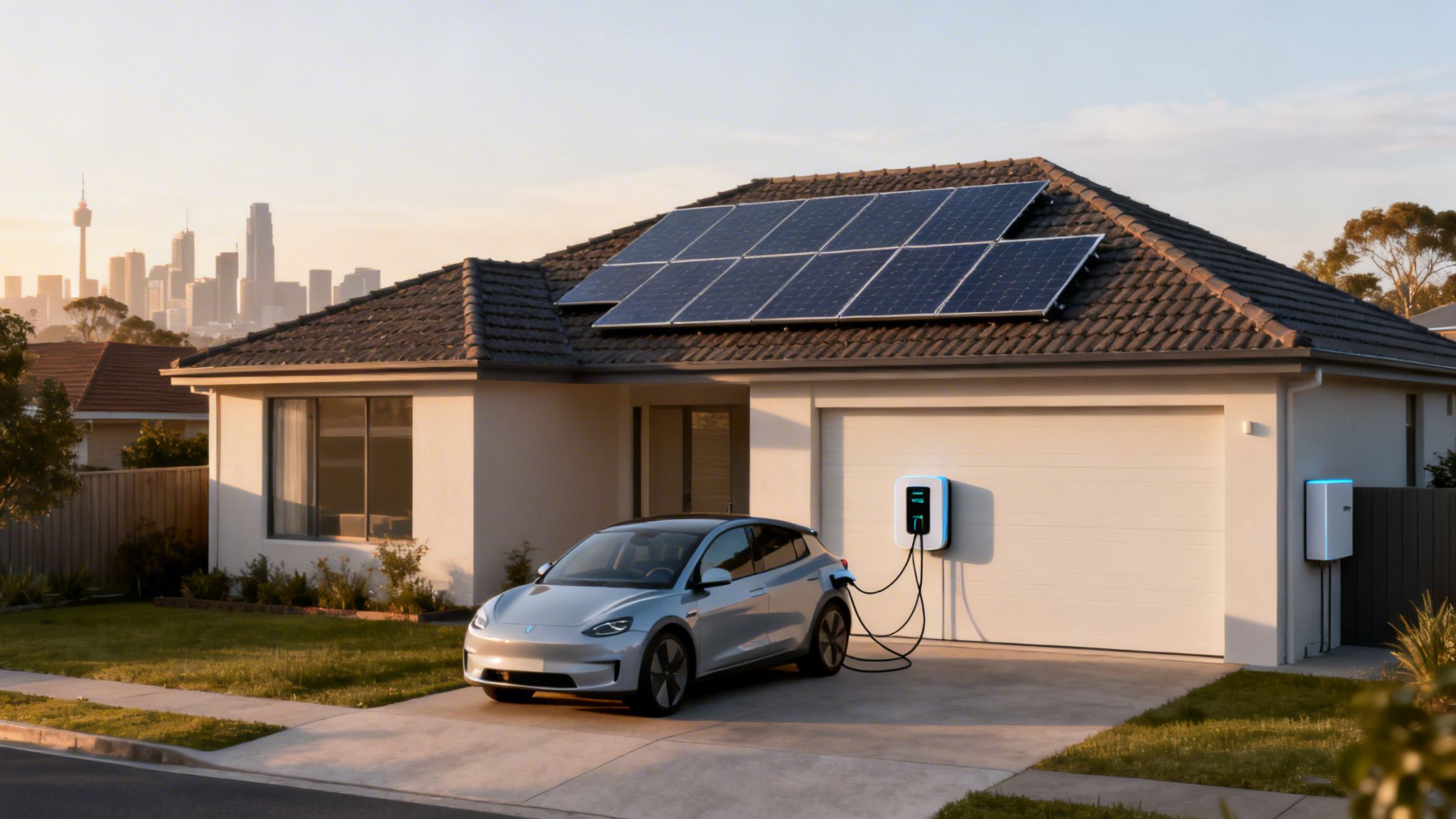
Think of your roof as the engine of your solar system. To get the most power out of it, you need to make sure it’s perfectly positioned to catch as much direct sunlight as possible. A professional site visit will analyse every factor that plays a part.
Your Roof's Orientation and Tilt
Here in the Southern Hemisphere, the absolute gold standard for solar panels is a north-facing roof. Why? Because it allows them to soak up the maximum amount of sun as it travels across the northern sky all day long.
But let's be realistic—most Sydney homes aren't perfectly aligned. And that’s completely fine. In fact, we can use other orientations strategically. East-facing panels are brilliant for generating power first thing in the morning, while west-facing panels kick in during the afternoon, which is often when household demand peaks.
The angle, or tilt, of your roof also matters. Most typical Sydney roof pitches are fine, but the sweet spot for year-round sun exposure is usually an angle between 20 and 30 degrees.
Evaluating Shading and Obstructions
Even the best-oriented roof can have its solar potential crippled by shading. This is one of the biggest energy killers we look for during a site inspection.
Common sources of shade to watch out for include:
- Large Trees: Your trees—or your neighbour’s—can cast long shadows, especially in winter when the sun sits lower in the sky.
- Adjacent Buildings: A nearby apartment block or even a neighbour's two-storey extension can easily block out precious hours of sunlight.
- Rooftop Obstructions: Things on your own roof like chimneys, vents, and satellite dishes can create small but surprisingly impactful shadows that creep across your panels throughout the day.
A professional assessment doesn’t just spot shade; it models how those shadows will move across your roof every hour of the day, all year round. This data is absolutely essential for designing a panel layout that sidesteps these energy-sapping dead zones.
The Professional Site Assessment
While online calculators can give you a rough idea, they are no substitute for having a qualified solar professional on-site. This hands-on inspection confirms your home isn't just suitable, but truly ready for a safe, high-performing system for decades to come.
If you want a preliminary look at what solar could mean for your bills, you can calculate your potential solar savings with our online tool.
A proper site assessment covers two non-negotiable checks:
Structural Integrity: An installer will get into your roof space and physically inspect the framework. They need to confirm it can comfortably and safely support the weight of the solar panels and mounting gear for the next 25+ years.
Switchboard Evaluation: Your switchboard is the gateway connecting your solar system to the grid. We have to make sure it’s up to current Australian standards and can handle the extra electrical load. This is a critical safety check for your entire home.
Designing a Future-Proof Solar Power System
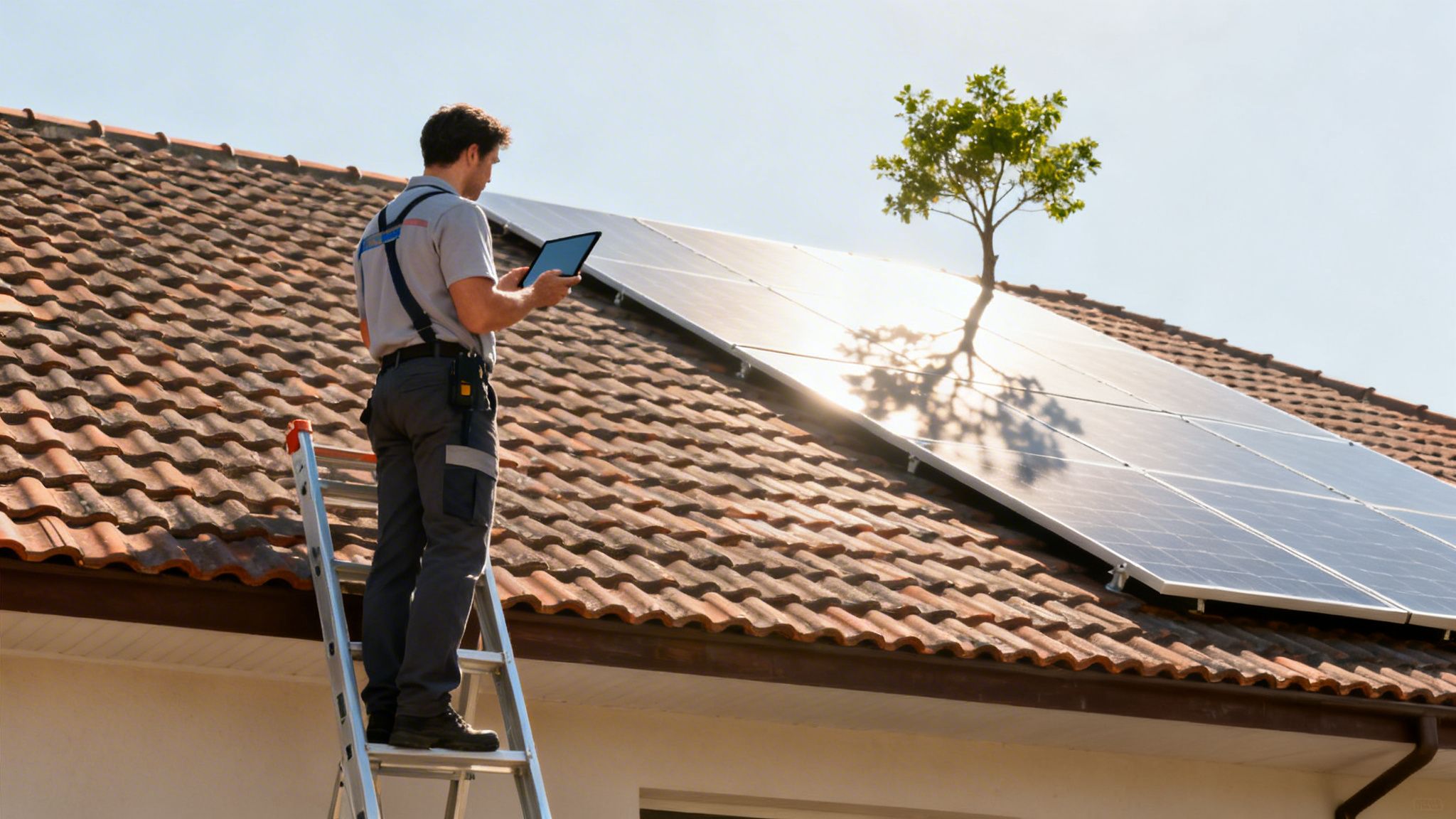
Once we've figured out what your roof is capable of, the real fun begins. Now, we get to design a solar power system that doesn't just meet your needs today but sets you up for the future.
This is where a quality solar system installation in Sydney stands apart from a cookie-cutter job. It's about more than just slapping panels on the roof; it’s about creating an energy asset that grows with your family.
First, we dig into your old power bills. This isn't just about finding the total cost; it’s about understanding how and when you use electricity. We’re looking for the rhythm of your home’s energy use—the morning rush before school and work, the mid-day appliance usage, and the evening peak when everyone’s back home.
But that’s just one half of the picture. We also need to talk about your plans for the future. Are you thinking about adding a solar battery in a couple of years? Is an electric vehicle on the horizon? Answering these questions now is the secret to designing a system that won’t hold you back later.
Sizing Your System for Today and Tomorrow
Getting the system size right is a careful balancing act. You want enough power to slash your current bills, but you also need enough breathing room for what’s next.
A system that’s too small is a recipe for frustration and ongoing grid reliance. Go too big, and you’re investing in capacity you might not need.
For many Sydney households, a 6.6kW system hits that sweet spot, offering a fantastic blend of power output and value. But if you have a larger family, a pool pump, or run ducted air conditioning all summer, a 10kW system (or even larger) often makes more sense, especially if a battery or EV is in your five-year plan.
The golden rule of smart solar design is this: plan for the system you’ll need in five years, not just the one you need today. This foresight prevents the expensive mistake of having to add a second, clunky system or replace key hardware just because your original setup couldn't expand.
A genuinely future-proof design means choosing a ‘battery-ready’ inverter and making sure your switchboard can handle an EV charger without a complete, costly overhaul. It’s all about making smart decisions now to keep your options open later.
Understanding the Key Components
Let’s pull back the curtain on the technology so you know exactly what you’re investing in. While the solar panels get most of the glory, it’s actually the combination of all the parts that dictates how well your system performs for the next 25+ years.
To help you get familiar with the hardware, here’s a quick rundown of the essential components and what they do.
Key Components of Your Sydney Solar System
| Component | Primary Function | Why It Matters for Your Sydney Home |
|---|---|---|
| Solar Panels | Convert sunlight into Direct Current (DC) electricity. | High-efficiency panels are crucial for getting the most power out of limited or complex roof spaces, which is common on Sydney properties. |
| Solar Inverter | Converts DC electricity from the panels into the Alternating Current (AC) your home and appliances use. | This is the brain of your system. It manages energy flow and is key to system monitoring and future expansion (like adding a battery). |
| Mounting System | The framework that securely attaches the panels to your roof. | This is the unsung hero. A high-quality, corrosion-resistant mounting system is essential to withstand Sydney’s coastal air and storms for decades. |
By carefully selecting and sizing each of these components, we design a system that’s perfectly matched to your home, your habits, and your goals.
A Closer Look at the Hardware
Solar Panels are the workhorses. Modern high-efficiency panels can pump out a surprising amount of power even on smaller roofs, a massive advantage for terrace houses and properties with limited north-facing space.
The Solar Inverter is the system's brain. It takes the DC power from the panels and turns it into the usable AC power that runs everything in your house. Your choice here—whether a string inverter or microinverters—depends heavily on your roof shape and any potential shading from trees or neighbouring buildings. You can learn more about how they work and their monitoring capabilities in our guide on enhancing solar efficiency with inverter remote monitoring.
Finally, there's the Mounting System. It might not be the most exciting part, but this is the skeleton holding your entire investment together. Using a top-quality, corrosion-resistant racking system is non-negotiable. It’s what ensures your panels stay put, year after year, through every Sydney storm.
Understanding Solar Rebates and Approvals in NSW
Let's talk about the financial incentives—and the paperwork. For many Sydney homeowners, this part of going solar seems like a huge hassle. But honestly, it's a well-worn path, and with a good installer, you won't have to lift a finger. They handle it all, turning what looks like red tape into real, upfront savings.
The biggest incentive is the federal government's Small-scale Renewable Energy Scheme. This isn't a rebate you have to claim back months later. It’s an instant discount that comes straight off the total cost of your system.
What Are Small-scale Technology Certificates (STCs)?
The scheme works using things called Small-scale Technology Certificates (STCs). The easiest way to think of them is as energy credits. The bigger your system and the sunnier your location, the more credits you get.
Your accredited solar installer calculates how many STCs your system qualifies for and claims them on your behalf. They then take the total value of those certificates and apply it as a discount on your final invoice. It's the single biggest factor that makes a high-quality solar system so accessible.
The whole point of the STC program is to lower the financial barrier to entry. It’s not a cashback offer; it’s a powerful point-of-sale discount that makes a high-quality solar system in Sydney affordable from day one.
The value of STCs can change with market demand, but your installer will lock in the price on your quote. That way, there are no surprises. To get into the nitty-gritty, you can check out our detailed guide on NSW government rebates for solar.
Getting the Green Light: Local Approvals
Beyond the federal rebate, there are a couple of local approvals needed before your system can be officially switched on. Again, this is something your solar partner manages completely, making sure everything is ticked off correctly.
There are two main hoops to jump through:
- Network Distributor Approval: Before a single panel goes on your roof, your installer has to get approval from your local electricity network. In Sydney, that's usually Ausgrid or Endeavour Energy. They need to sign off on your system’s connection to their grid, ensuring it meets all their safety and technical rules.
- Council Compliance: The good news is, most rooftop solar installations in NSW are considered 'exempt development'. This is a fancy way of saying you don't need to lodge a full Development Application (DA) with your council, provided the system fits within certain guidelines. Your installer verifies this for you.
This background work is what separates a professional job from a dodgy one. A reputable installer earns their keep here, saving you the headache of dealing with technical submissions and complex forms. The fact that this process is now so smooth is a big reason for the solar boom across the state.
By mid-2026, Australia had blown past 4.1 million solar installations. NSW is leading the pack with the highest rooftop capacity at 7.5 GW from over one million systems. It's clear that Sydney is a huge part of why nearly half of all suitable Aussie homes now have solar. You can explore more on these Australian solar statistics from Green.com.au.
Achieving Energy Independence with Batteries and EV Chargers
A standard solar panel setup is a brilliant first step. But what if you could take it further? Pairing your panels with a solar battery and an electric vehicle (EV) charger is how you turn your home from a simple power-saver into a self-sufficient energy hub.
This is the ultimate upgrade for your home, unlocking true energy independence and maximum savings.
A solar battery’s job is simple: it captures and stores all the excess, free energy your panels generate during the day. Instead of sending that valuable power back to the grid for a pittance, you keep it for yourself.
Think of a solar battery as your personal energy reservoir. It fills up with clean, free solar power all day, then releases it at night or during peak-cost periods. This shields you from the most expensive electricity rates and puts you back in the driver's seat.
This is where a solar system installation in Sydney really starts to sing. You use your own solar energy around the clock, dramatically cutting your reliance on the grid and taking back control from the big energy retailers.
Maximising Your Solar Investment with Battery Storage
Adding a solar battery unlocks the true potential of your solar panels. During the day, your panels will first power your home and then start filling up the battery. Only once the battery is full will any extra power be sent to the grid.
The real magic happens when the sun goes down. Instead of buying expensive electricity from the grid for your evening cooking, lighting, and entertainment, your home automatically switches over to your stored battery power.
This powerful combination delivers huge benefits:
- Massive Bill Reductions: By using your own stored solar energy at night, you can slash your grid electricity consumption by up to 90% or even more.
- Protection from Price Hikes: You become largely immune to the evening peak tariffs that energy companies love to charge when grid demand is highest.
- Backup Power During Outages: Certain battery systems can also provide backup power, keeping your lights on and essentials running during a blackout.
This isn't some futuristic dream; it's happening right now across NSW. After leading the nation with 321 MW of new rooftop solar capacity in the first half of 2025, the state saw a massive surge in battery adoption. Following the launch of the Cheaper Home Batteries Program, NSW homeowners installed a whopping 15,418 new solar batteries, showing just how many people are getting savvy about their energy. To see the full report, you can explore more about Australia's solar and battery statistics from Elite Power Group.
Driving on Sunshine with an Integrated EV Charger
The next logical step in creating your complete home energy ecosystem is plugging in an EV charger. The growth of electric vehicles in Sydney is undeniable, and pairing one with your solar system is the ultimate power move.
Think about it: an EV is essentially a big battery on wheels. By installing a home EV charger, you can 'fuel' your car with the free, clean energy generated by your own roof. That means you can say goodbye to expensive public charging stations and the petrol bowser forever.
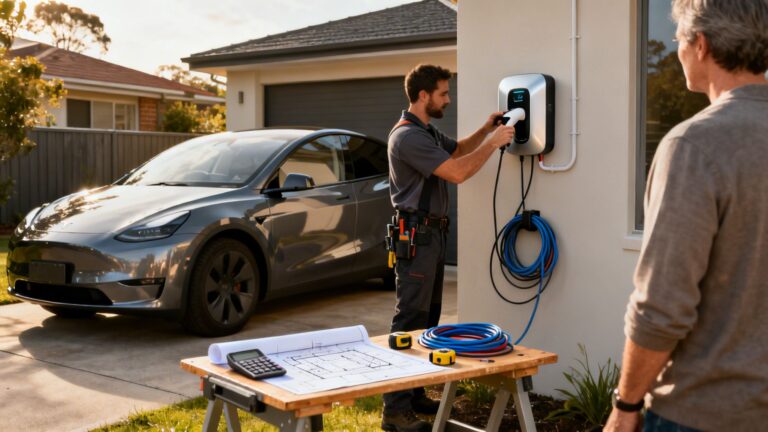
A smart EV charger can even be programmed to only draw power when your solar panels are generating a surplus. This ensures you’re charging your car with 100% solar energy, which means you are, quite literally, driving on sunshine. For homeowners keen to get this set up, this guide to home EV charger installation is a great resource.
These advanced, integrated solutions are a practical reality for Sydney homeowners today. With the right design and hardware, your solar system becomes the central hub that powers your home, your battery, and your car. To dive deeper into choosing the right storage, check out our battery comparison guide.
How to Choose the Right Solar Installer in Sydney
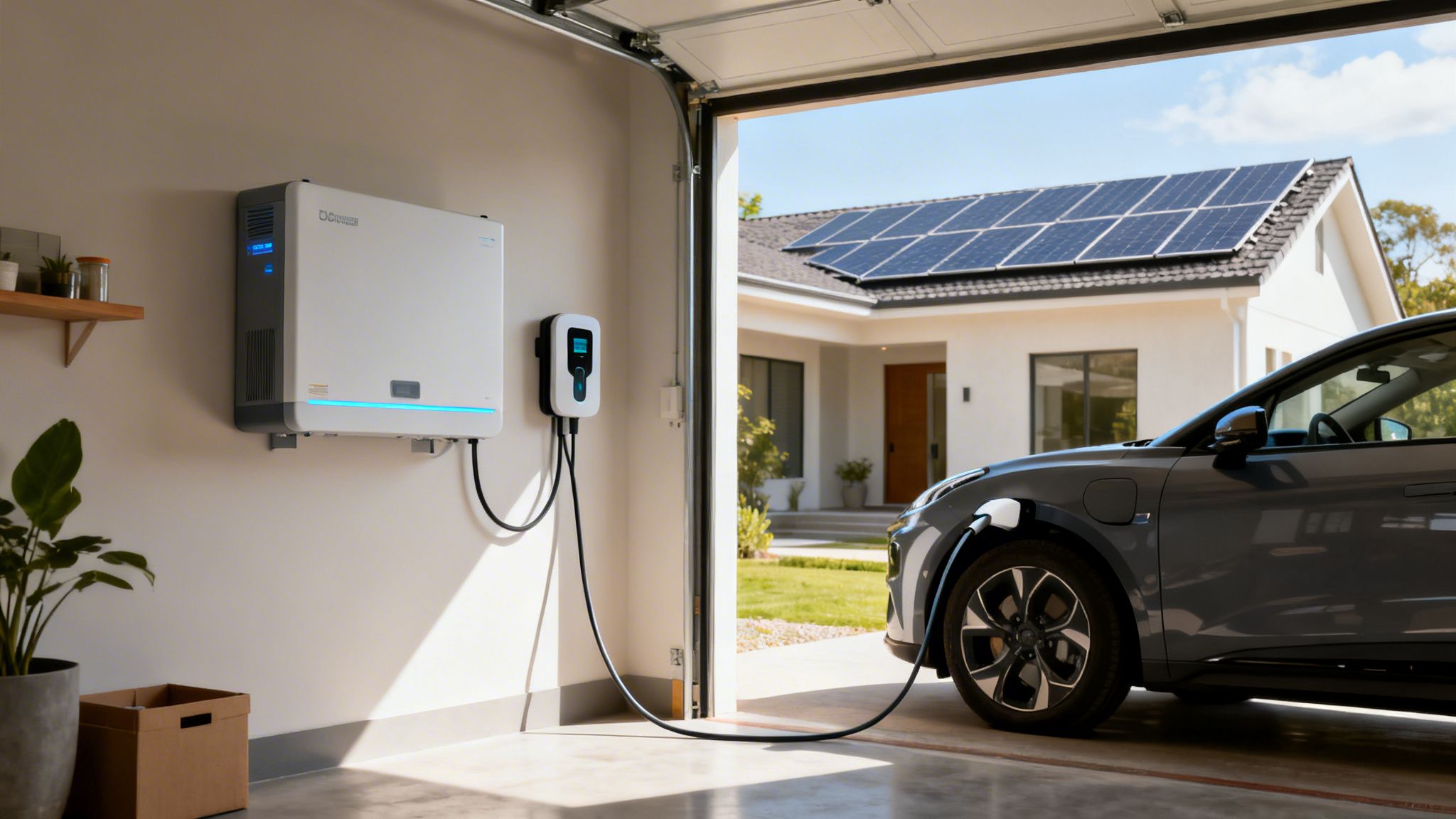
When it comes to putting solar on your Sydney home, picking the right installer is hands-down the most important choice you'll make. This isn't just about getting panels on the roof; it’s about the quality of the gear, the safety of the work, and who you’ll call for support over the next 25 years.
It’s tempting to just grab the cheapest quote and run with it. But be warned: solar is a lot like a major home renovation. A bargain-basement price often hides a world of pain—dodgy components, outsourced labour with questionable skills, or a company that vanishes when you need warranty support in five years.
Choosing a reputable, established installer isn't an expense; it's your best insurance policy. It's the only way to make sure your system actually delivers what was promised and that you have a reliable local team to back you up for the long haul.
Non-Negotiable Credentials to Check
Before you even glance at a quote, there are two credentials every legitimate solar installer in NSW must have. If a company can't show you these straight away, walk away. No excuses.
Clean Energy Council (CEC) Accreditation: This is the gold standard for Australia's solar industry. It proves the business and its installers follow best practices for design and installation. More importantly, only systems installed by a CEC-Accredited Installer are eligible for the STC rebate.
NSW Electrical Contractor Licence: This is non-negotiable. Solar installation is licensed electrical work, and you need to see proof that your installer holds a current electrical contractor licence with Fair Trading NSW. It’s a legal requirement that protects your home and your family.
Think of it like a driver's licence. You wouldn't let an unlicensed driver take your car for a spin, so don't let an unaccredited installer touch your home's electrical system.
A great installer will have their CEC accreditation and electrical licence number plastered all over their website, quotes, and business cards. It’s a sign of pride and professionalism. They’re not hiding anything because they're confident and accountable for their work.
Key Questions to Ask Every Installer
Once you’ve confirmed they’re licensed and accredited, it’s time to separate the true experts from the high-pressure sales outfits. The answers to these questions are incredibly revealing.
Do you use your own in-house installation team or subcontractors?
This one is huge. Companies with their own dedicated teams of electricians and apprentices have direct control over workmanship, safety, and quality. Firms that rely on a revolving door of subcontractors have almost no oversight, which is how you end up with messy wiring and poor performance.
What warranties do you offer?
You'll hear a lot about warranties, but they come in a few different flavours. You need to understand all of them.
- Product Warranty: This covers the physical hardware—your panels, inverter, and battery—against defects. It comes directly from the manufacturer.
- Performance Warranty: This guarantees the solar panels will still generate a certain percentage of their original power after 25 years.
- Workmanship Warranty: This is the installer’s own promise, covering the quality of their actual work. Five years is the absolute minimum, but you'll find top-tier installers offering 10 years or more.
A strong workmanship warranty is a massive vote of confidence. It tells you the installer trusts their own team and plans to stick around to support their work. This is your first port of call if something goes wrong with the installation itself.
Common Questions About Sydney Solar Installations
Deciding to go solar is a big step, and it's natural to have questions. We get asked the same things every day by Sydney homeowners just like you. Let's clear up some of the most common queries so you can feel confident about your investment.
How Long Does a Typical Solar Installation Take?
From signing the paperwork to flicking the switch, the whole process usually wraps up within 4 to 6 weeks for a standard residential solar system in Sydney. This window gives us time to handle final designs, order your components, and sort out all the network approvals.
The part where we're actually at your house is surprisingly fast. Our accredited in-house electricians can typically get a standard system fully installed—panels, wiring, inverter and all—in just 1 to 2 days.
What Happens When There Is a Blackout?
This is probably the most common misconception about solar. A standard grid-connected solar system will automatically shut down during a blackout. It’s a crucial safety measure called 'anti-islanding', and it’s there to protect the technicians working on the power lines from electricity feeding back from your home.
If you want to keep the lights on when the grid goes down, you'll need a solar battery with backup power.
Think of a solar battery with backup as your personal power station. It automatically kicks in the moment a blackout hits, powering your essential circuits without you having to do a thing. It’s the key to real energy independence.
How Much Maintenance Does a Solar System Need?
Solar systems are brilliantly low-maintenance. With no moving parts, they’re built tough to handle the Australian sun and storms for more than 25 years.
Your main job is just to keep the panels clean. While Sydney’s rain helps, a build-up of dust, pollen, and bird droppings can slightly reduce your system's output. We recommend getting a professional clean and system check-up every 1 to 2 years to keep it running at its best. This quick inspection ensures all the connections are tight and the inverter is performing exactly as it should.
Can I Add a Solar Battery Later On?
Absolutely. In fact, it’s a really popular and smart way to go. If a battery isn't in the budget right now, we can design your system to be ‘battery-ready’ from day one.
This just means we'll install a specific type of inverter—a hybrid inverter—at the start. A hybrid inverter is built to talk to your panels, the grid, and a battery. By getting this component right from the beginning, adding a battery down the track becomes a simple, plug-and-play job without needing to replace any of your core equipment. It’s a great way to future-proof your investment.
Ready to take back control of your energy bills with a trusted local expert? The team at Interactive Solar has over 20 years of combined experience delivering high-performance solar, battery, and EV charging solutions across Sydney. We handle every step, from design to installation, with our own in-house accredited teams. Visit us to get your obligation-free quote.