Roof Vent Installation: The Smart First Step to Home Energy Savings
Understanding the investment in a roof vent installation isn't about finding a single magic number. It's about making a strategic investment in your home's comfort, long-term running costs, and future energy efficiency. While every job is different, getting a handle on the factors involved helps you understand the real value behind a professional quote, especially when looking at the bigger picture of home energy solutions like solar panels and batteries.
Decoding Your Roof Vent Installation Quote
When a quote for a roof vent installation lands in your inbox, you’re essentially looking at two key components: the vent itself and the skilled work needed to fit it properly. It’s a bit like buying a new appliance; you invest in the unit, but you also need a professional to make sure it’s installed safely and works as it should for years to come. A badly fitted vent can cause leaks and expensive roof damage, wiping out any perceived savings.
This is exactly why a transparent quote is so important. A good roofer will break down the costs clearly, often using tools like Exayard roofing estimating software to accurately assess the materials and labour required. A clear quote shows you precisely what your investment covers.
Breaking Down the Core Expenses
The final investment really comes down to the type of vent you choose and the complexity of the installation. A simple, passive vent is naturally going to be a different investment compared to a solar-powered model that actively forces air out of your roof space.
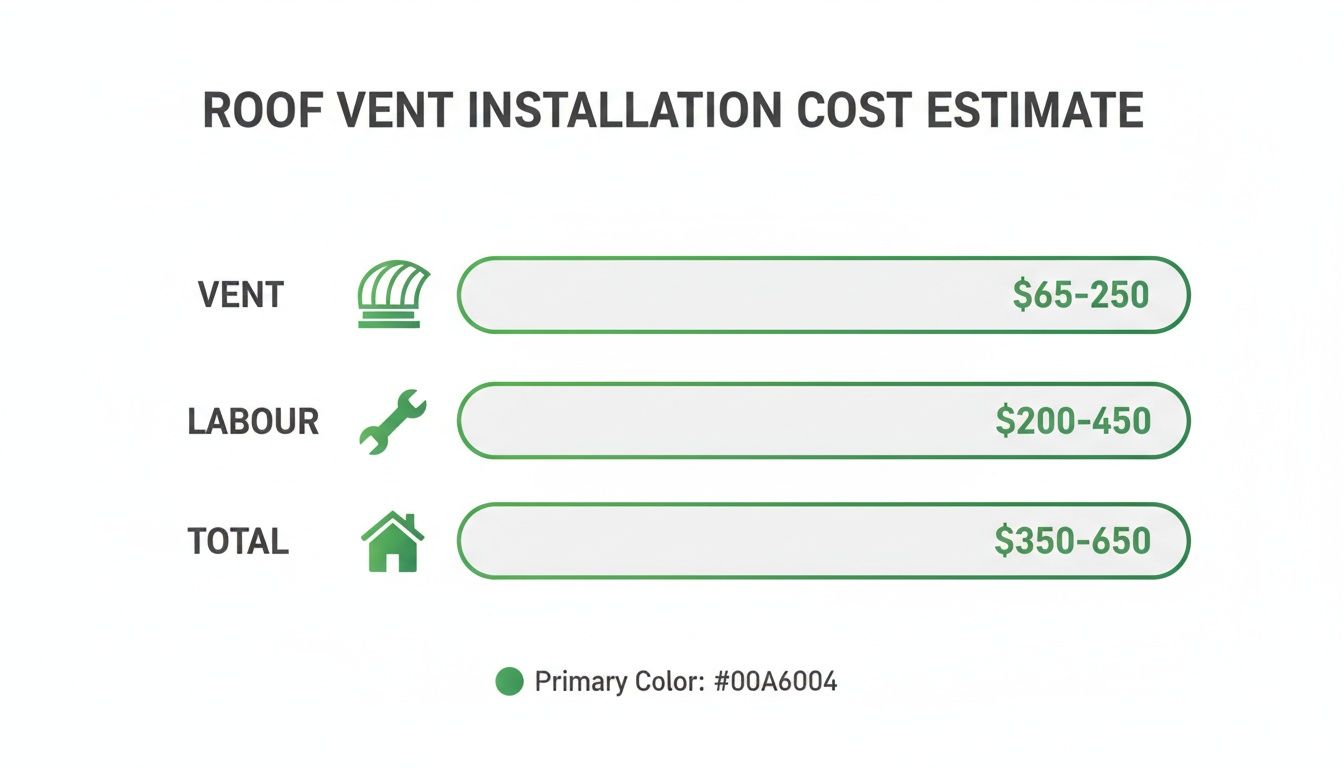
As you can see, labour is often a significant part of the bill. That's the value of professional expertise, and it's essential to get the job done right, protecting your home and paving the way for future energy upgrades.
Factors Influencing Roof Vent Installation Investment
To help you budget, it's important to understand the different types of roof vents available and how their features affect the overall project. These estimates can vary based on your specific home and needs.
| Vent Type | Key Considerations |
|---|---|
| Whirlybird/Turbine Vent | A common passive option, reliant on wind. |
| Ridge Vent | A discreet passive vent that runs along the roof's peak. |
| Static/Cowl Vent | A simple, no-moving-parts passive vent. |
| Solar Powered Vent | Actively removes air using free solar energy. |
| Mains Powered Vent | A high-performance option wired into your home's electricity. |
These options provide a good starting point, but remember that factors like roof pitch, material, and accessibility can shift the final investment. Always get a detailed, itemised quote from your installer to understand the full scope of work.
More Than Just a Vent: It's the First Step to Energy Efficiency
Looking at roof ventilation as just another household expense is missing the bigger picture. It’s one of the smartest first moves you can make toward a truly energy-efficient home. A well-ventilated roof dramatically cuts the workload for your air conditioner, which is almost always the biggest power guzzler in the house.
This reduction in your home's base energy load is the key. It creates the perfect foundation for future upgrades like solar panels, batteries, and EV chargers, as a more efficient home requires a smaller, more affordable system to achieve energy independence.
This kind of strategic thinking ensures every upgrade you make builds on the last one. By starting with something as simple as ventilation, you’re not just cooling down your attic; you’re paving the way for a complete home energy solution. This is where partnering with experts who understand this whole ecosystem is vital, ensuring your investment in quality installations pays off for years to come.
Why Ventilation Is Your Home's Unsung Hero

It’s easy to forget, but your home needs to breathe. Without a way to exhale, trapped air builds up in your roof cavity and causes all sorts of problems.
During a hot summer, your roof absorbs a massive amount of solar heat. This heat gets stuck in your attic, turning it into a giant oven. That intense heat doesn’t just stay up there—it radiates down into your living spaces, making your air conditioner work overtime just to keep the house liveable.
The result? Your AC unit is under constant strain, and your power bills climb right alongside the temperature. This is where roof ventilation comes in. It gives that suffocating hot air an escape route, letting your home finally breathe.
The Problem With Trapped Air
The trouble doesn't stop when summer ends. A poorly ventilated roof creates issues year-round, setting the stage for structural damage and poor indoor air quality.
In winter, the problem flips. Warm, moist air from daily life—showering, cooking, even just breathing—rises and gets trapped in your cold roof space. When that humid air meets the chilly underside of your roof, it condenses into water droplets.
This trapped moisture is a recipe for disaster:
- Mould and Mildew Growth: A damp, dark attic is the perfect breeding ground for mould, which can pose serious health risks for your family.
- Timber Rot: Persistent dampness will eventually rot the structural timbers in your roof frame, leading to costly repairs.
- Degraded Insulation: Once insulation gets wet, it stops working effectively. It becomes a damp, useless mat, crippling your home's energy efficiency.
A properly ventilated roof does more than just control heat. It’s a defence mechanism that protects your home’s structural integrity and creates a healthier living environment. Think of it as preventative medicine for your house.
A roof vent installation isn't just another expense. It's a long-term investment in preserving your home and managing its running costs. By giving your house the ability to breathe, you stop these hidden dangers before they become expensive emergencies.
Real-World Benefits You Can Feel
Proper ventilation delivers tangible results you'll notice right away. Homeowners are finding that this straightforward upgrade leads to genuine savings and a much more comfortable home, especially when the summer heat hits.
Effective roof ventilation is a game-changer. It’s not just a nice-to-have; it's essential for creating an energy-efficient home ready for the next step.
Improving your home's natural ability to handle temperature extremes is a smart first move. Once your home isn't fighting a losing battle against trapped heat, it becomes a perfect candidate for other energy-saving tech. Reducing the workload on your air conditioner, for example, makes the whole system more efficient and ready for solar. You can see how this works in our guide on how efficient heat pumps create a smarter, more cost-effective home. When you start thinking of your home as an interconnected system, you can make smarter investments that deliver real returns.
Choosing the Right Roof Vent for Your Home
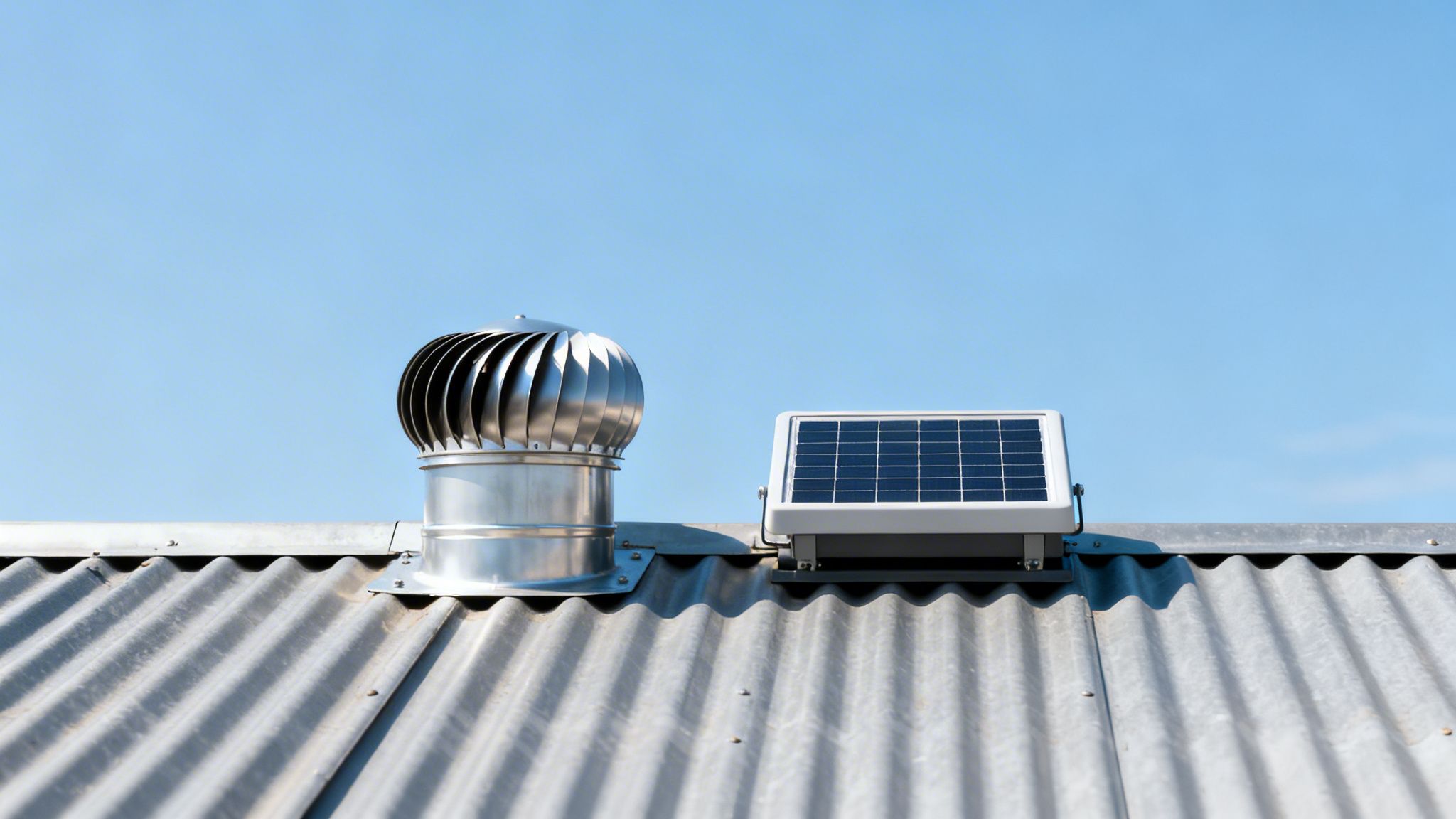
Picking the right roof vent isn’t just a box-ticking exercise—it’s a decision that directly affects your home's comfort and your power bills. It's easy to get lost in the options, but it really boils down to two main camps: passive vents and powered vents. Understanding the difference is the key to finding the best fit for your home and your long-term energy goals.
Passive vents are the set-and-forget solution. They run on natural air movement, using wind and the simple fact that hot air rises to do their job. No electricity, no running costs. Just simple, reliable physics at work.
Powered vents, on the other hand, take a more active approach. They use a fan, driven by either mains power or the sun, to physically pull stale, hot air out of your roof space. This gives you guaranteed ventilation, even on those dead-still summer days when passive vents struggle. The right choice really comes down to your home’s design, the local climate, and what you’re trying to achieve with your energy use.
Passive Vents: The Classic Solution
Across Australia, passive vents are a go-to for their sheer simplicity and reliability. With no moving parts (other than wind-spun turbines) and zero need for an electrician, the investment for these units is often more approachable.
The most common one you'll see is the whirlybird, or turbine vent. These classic spinners are designed to catch the wind, creating a vacuum effect that sucks hot air out of the roof cavity. They work a treat in windy spots, but their performance definitely dips on those scorching, still days when you need ventilation the most.
Another great passive option is the ridge vent. It's installed discreetly along the ridgeline of your roof, creating a long, continuous exit point for hot air. When you pair a ridge vent with soffit vents under the eaves to let cool air in, you create a natural and highly effective airflow loop.
- Pros of Passive Vents:
- No running costs—they’re powered by Mother Nature.
- Lower upfront supply and installation investment compared to powered models.
- Extremely reliable with almost no maintenance required.
- Cons of Passive Vents:
- Performance is entirely dependent on the weather, especially wind.
- Might not be enough to properly ventilate a very large or complex roof.
A well-designed system is fundamental to your home's health. To see how these parts fit into the bigger picture, it's worth exploring the essential types of attic ventilation. This will help you understand what makes for a truly effective setup.
Powered Vents: For Maximum Performance
When you absolutely need guaranteed airflow, rain or shine, powered vents are the answer. They deliver consistent performance, which makes them perfect for homes in hotter regions or houses with tricky roof designs that resist passive airflow. This is the first step towards a truly managed home energy system.
Mains-powered vents are wired directly into your home’s electricity. They offer serious ventilation power but will add a small amount to your quarterly bill. You'll also need a licensed electrician to handle the wiring, which is a factor in the total installation investment.
Then there's the modern workhorse: the solar-powered vent. These units feature a built-in solar panel that powers the fan, which means they run for free whenever the sun is out. That’s exactly when your roof space is at its hottest, making them a brilliant, energy-smart solution.
Solar vents are a clever bridge between simple home maintenance and a full-blown energy efficiency strategy. They work on their own, using free energy from the sun to actively cool your roof cavity. This reduces the heat load on your entire home, meaning your air conditioner doesn't have to work nearly as hard.
This is where you start seeing real synergy. By fighting heat at the source, a solar vent makes your whole home more efficient. It's often the first step towards a house that works smarter, preparing it for a full solar panel and battery system. If you're looking to take things further, understanding how these systems integrate is crucial. You can see how all the pieces fit together by exploring our approach to roof ventilation systems.
Solar Vents: The Smart Choice for Future Savings
Opting for a solar-powered roof vent is about more than just moving air; it’s a strategic investment in your home’s energy independence. While the initial investment might be higher than a standard whirlybird, the payback comes from long-term energy savings and setting the stage for bigger upgrades.
Because they run entirely on solar power, these vents actively cool your home with zero running costs. This has a direct knock-on effect on your air conditioner, which is one of the biggest energy hogs in any household. Less AC use means lower power bills, starting from the day it’s installed.
This initial efficiency boost creates the perfect foundation for future energy upgrades. A home that is already working to keep itself cool naturally will require a smaller (and more affordable) solar and battery system to achieve real grid independence. A solar vent is the first domino to fall in a chain reaction of energy savings that leads to solar panels, home batteries, and even EV chargers.
Hidden Factors That Shape Your Final Quote
Ever looked at two quotes for the same job and wondered why they're worlds apart? The truth is, a professional quote for a roof vent installation isn't just about the vent's price tag and an hourly rate. A roofer's real job is to spot the little details that can turn a simple task into a complex one.
These "hidden" factors—things specific to your property—are what separate a vague estimate from an accurate, fixed-price quote. A good installer doesn't guess; they assess your roof to see what challenges might pop up. This is why a detailed quote is a sign of a pro—it means no nasty surprises for you later on.
The Impact of Your Roof's Design
Let's be clear: no two roofs are the same. The unique shape and structure of your roof are probably the biggest drivers of the labour cost. A single-storey home with a low-pitched roof? That's about as straightforward as it gets.
But things can get complicated fast.
Roof Pitch and Height: As soon as a roof gets steep, it becomes a different ball game. It’s harder to walk on, and safety becomes paramount. Installers will need to use harnesses and roof anchors. That all takes extra time. The same goes for a two- or three-storey home; the extra height means more setup and more safety precautions.
Ease of Access: Can we park the van nearby and get our ladders up easily? Or is the roof blocked by big trees or tight alleyways? If we need to bring in specialised gear like scaffolding just to get up there, that's going to be factored into the time and investment.
A job that takes two hours on an easy-access, low-pitched roof can easily stretch to four hours on a steep, high one. That’s a direct impact on the final roof vent installation cost.
How Roofing Materials Affect the Job
The type of roof you have plays a massive role in how we approach the installation. Some materials are a breeze to work with, while others require a delicate touch, specialised tools, and a lot more patience to avoid causing expensive damage.
Take a standard metal Colorbond roof. For an experienced installer, cutting the hole and sealing the vent is a pretty quick and predictable job. But terracotta or concrete tiles? That's a different story entirely.
Think of it as a craft. With tiles, you can't just cut a hole. You have to carefully remove the tiles without breaking them, install the vent, and then painstakingly cut and refit the tiles around it to create a completely waterproof seal. One wrong move, one cracked tile, and you’ve created a future leak.
This is why installing a vent on a tile roof almost always takes longer and requires a larger investment than the same job on a metal roof. A professional quote will always reflect this difference in skill and time required.
Electrical and Compliance Considerations
If you're looking at a powered vent—either mains or solar—we're stepping into another important area: electrical work. In Australia, the law is crystal clear. Any fixed electrical wiring must be done by a licensed electrician. This isn't negotiable; it's about safety and legal compliance.
This means the installation team needs to include a qualified sparkie, like the in-house experts at Interactive Solar (Licence #329360c). This guarantees your fan is installed safely, meets all Australian Standards, and won’t cause issues with your home insurance.
On top of that, some local councils or strata committees have their own rules about what you can and can't stick on a roof. A good local installer knows these regulations inside and out. They'll make sure your project is fully compliant from the get-go, saving you from any potential headaches. This is where partnering with a team that understands the local landscape really pays off, especially when planning a complete home energy system.
Putting It All Together: The Path to Real Energy Independence
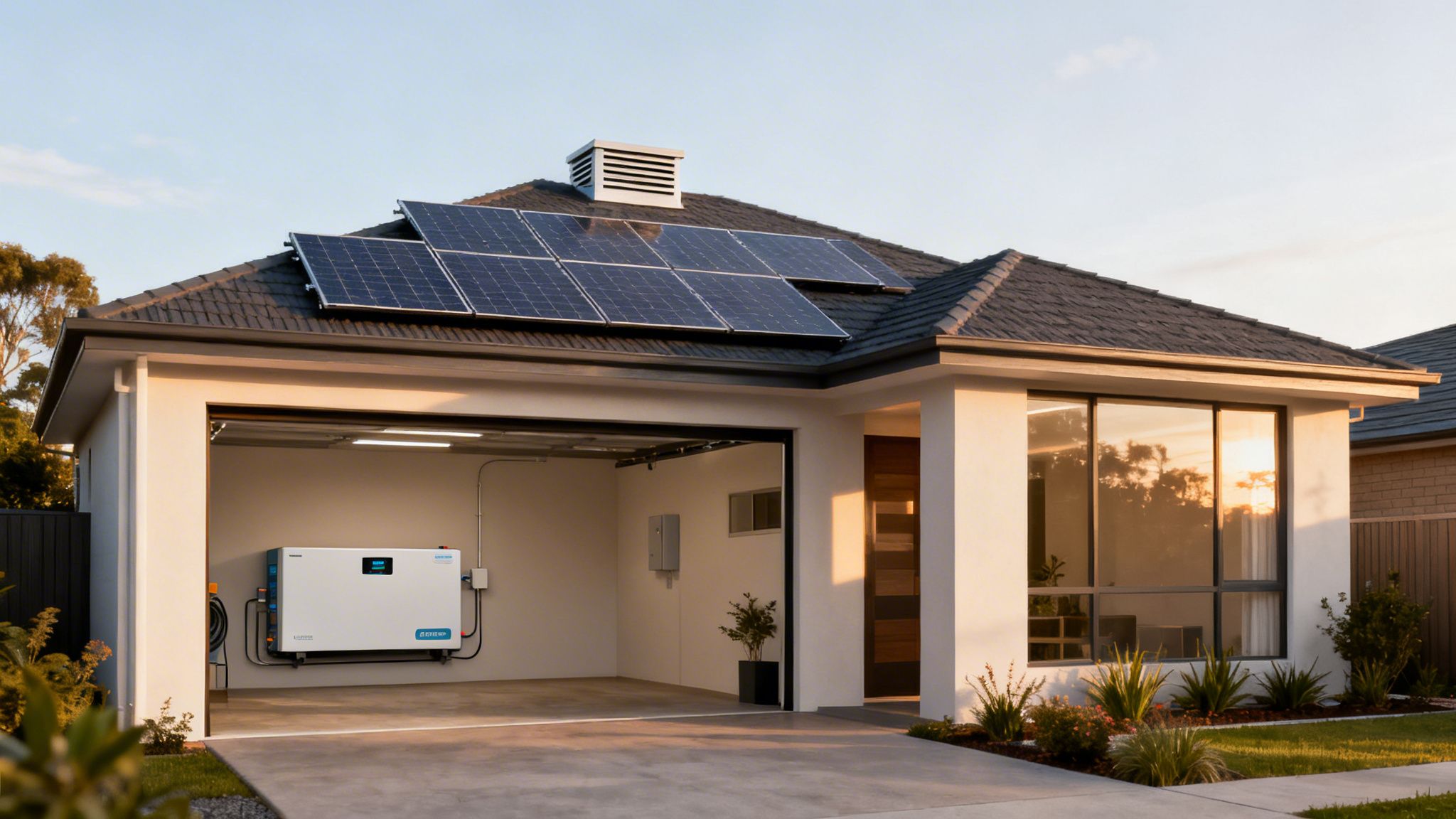
Getting a smart roof vent installed is a brilliant first move, but it's really just the beginning. The real win comes when you see ventilation as the first domino to fall in creating a complete home energy system. This is how you shift from simply trimming your bills to genuinely chasing energy independence with solar panels, batteries, and even EV chargers.
Think about it this way: your house is in a constant battle with the Aussie sun. The sun beats down on your roof, turning your roof space into an oven, which in turn forces your air conditioner to work overtime just to keep you comfortable. A roof vent is your first line of defence—it stops that heat right at the source.
By getting that super-heated air out of your roof cavity, the vent dramatically cuts down on the heat radiating into your home. This one change gives your air conditioner—often the biggest power guzzler in the house—a much-needed break. It's this drop in demand that really sets the stage for everything else.
The Smart Combo: Solar and Ventilation
Once your house is naturally cooler, it simply needs less power to stay comfortable. This is where solar panels make their grand entrance, and their effect is immediately supercharged.
A cooler home means your air con runs less often and for shorter bursts. This frees up all that clean, free energy being made on your roof. Instead of struggling to keep up with a massive cooling load, your solar panels can now easily power more of your home's daily needs, charge a battery, or power your electric vehicle.
- More Self-Sufficiency: With a lower baseline energy demand, your solar system can cover a much bigger chunk of your household's power usage.
- Better Panel Performance: Fun fact—solar panels actually work better when they’re cooler. By venting hot air from the roof space directly underneath them, you can give their efficiency a small but welcome boost.
- Smarter Power Use: The extra solar power you generate can be used to run your home, charge a solar battery, or top up your EV, all powered by the sun.
This powerful duo turns two separate upgrades into one slick, energy-saving machine. The ventilation makes the solar system more effective, and the solar system powers the home that the vents helped cool down.
This synergy is the whole idea behind modern home energy management. You’re not just bolting on separate products anymore; you're building a smart system where every part helps the others work better. It’s about creating a home that actively works to lower its own running costs with solar panels, batteries, and EV chargers.
Closing the Loop with Battery Storage and EV Charging
The last piece of the energy independence puzzle is a solar battery and EV charger. This is what truly cuts the cord, freeing you from total reliance on the grid and its ever-rising prices.
After your solar panels have covered your daytime energy needs—which are already lower thanks to your roof vents—any extra power gets sent straight to your battery or your electric vehicle. It's like having your own private energy reserve, filled up with free sunshine.
Then, when the sun goes down, your home automatically switches over to your stored battery power. You can run your lights, watch TV, and even keep the air con humming through the night without pulling a single expensive watt from the grid. You get into a clean cycle of making, storing, and using your own power, 24/7.
For anyone looking to take it to the next level, a well-designed system like this can lead to massive savings. You can dive deeper into our expert advice on how to reduce electricity bills by creating this very type of home energy ecosystem.
When you bring these elements together—ventilation, solar power, battery storage, and EV charging—you build a clear path to taking back control of your energy bills. And it all starts with that one simple, smart decision: dealing with the heat on your roof.
Common Questions About Roof Vent Installation
Deciding to invest in your home always brings up a few questions. And when it comes to something as critical as your roof, you want to be sure you're making the right call. The cost and benefits of roof vent installation often raise some valid concerns, especially when considering it as a first step towards a larger solar energy system.
Let's cut through the noise and tackle the most common questions we hear from homeowners. We want to give you practical, straightforward answers so you can see the long-term value in getting this done right.
How Many Roof Vents Do I Actually Need?
This is easily the question we get asked most, and the honest answer is: it depends. There’s no magic number. The right amount of ventilation is unique to your home’s size, its specific design, and the type of vent you end up choosing.
A true professional assessment is the only way to get it right.
An expert will look at your home’s specific heat load, the pitch of your roof, and your insulation. From there, they can calculate the exact air exchange rate needed to cool your home effectively. This detailed approach makes sure you get a system that actually works, preparing your home for maximum solar efficiency.
An accurate calculation prevents you from spending too much on an overpowered system or, worse, spending too little on a system that doesn't actually solve the problem. It’s all about finding that perfect balance for maximum efficiency and value.
Can I Save Money by Installing a Roof Vent Myself?
The idea of a DIY install to lower the upfront investment is definitely tempting, but the risks are huge. A botched installation can easily compromise your roof's waterproofing, leading to leaks that cause serious, expensive structural damage over time. It could even void your roof’s warranty.
And let's be frank—working on any roof is inherently dangerous without proper training, experience, and the right safety gear. The potential for a serious fall is a risk that simply isn't worth taking.
On top of that, if you’re installing a powered vent (either mains or solar), the work legally must be done by a licensed electrician. For your own safety and to comply with Australian regulations, this is not a step you can skip.
Choosing a certified and insured installer like Interactive Solar (Licence #329360c) protects your biggest asset. It’s your guarantee that the installation is compliant, safe, and backed by a workmanship guarantee for real peace of mind.
Will a Roof Vent Make My Home Colder in Winter?
This is a completely logical concern, but modern ventilation systems are engineered for year-round benefits, not just summer cooling. In winter, the system's primary job shifts from getting rid of heat to removing the damaging moisture that rises from inside your home.
Everyday activities like cooking, showering, and even just breathing release warm, humid air that gets trapped in your roof space. This is where the real danger lies.
- Preventing Condensation: When this moist air hits the cold underside of your roof, it condenses. This creates the perfect breeding ground for mould and mildew.
- Protecting Your Structure: Over time, this constant dampness can lead to timber rot in your roof frame—a problem that is incredibly expensive and disruptive to fix.
Many of the advanced solar-powered vents we install come with built-in thermostats. These smart features automatically shut the fan off when it gets cold, preventing any wanted heat from escaping your home. When you pair a good ventilation system with quality ceiling insulation, your home actually becomes healthier in winter, not colder.
How Do Solar Panels and Roof Ventilation Work Together?
Think of them as a powerful partnership for total home energy efficiency. By actively cooling your roof cavity, ventilation takes a huge amount of pressure off your air conditioner. That single change dramatically lowers your home's overall energy demand, making it perfectly primed for a solar panel system.
This reduced demand means your solar panel system can work far more effectively.
Instead of your panels just fighting to keep up with a power-hungry air conditioner, they can easily cover your home's electricity needs. This leaves more surplus energy to be sent to a solar battery, used to charge your EV, or earn you credits from the grid.
On top of that, solar panels themselves perform better at cooler temperatures. By venting the super-heated air from the roof space directly underneath them, you can give your panels' own efficiency a small but meaningful boost. You can find more details on our complete range of solutions in our Frequently Asked Questions.
It all works together to create a smarter, more productive, and more cost-effective home energy system from top to bottom.