Residential Solar Installation Sydney: Your Guide to Energy Independence
For homeowners right across Sydney, a residential solar installation is the single best way to wrestle back control from the power companies and their unpredictable prices. When you generate your own clean electricity, you stop being a passive bill-payer and start taking charge of your energy future. This guide will walk you through exactly how to do it.
Why Sydney Homeowners Are Investing in Solar, Batteries & EV Charging
Let's be honest, the main reason solar is booming is simple: eye-watering electricity bills are putting a real dent in household budgets. Many families feel trapped by the constant price hikes, which makes the idea of generating your own power incredibly appealing. A properly designed solar system gets to work immediately, directly offsetting the power you use and slashing your quarterly bills from day one.
But this is about more than just saving money in the short term. It's a strategic investment to future-proof your home. By producing your own power, you build a financial buffer between your family and the volatile energy market, protecting you from the price rises we all know are coming. We've written a whole article on how to prepare for rising electricity prices, and solar is at the top of the list.
Creating a Complete Home Energy Solution
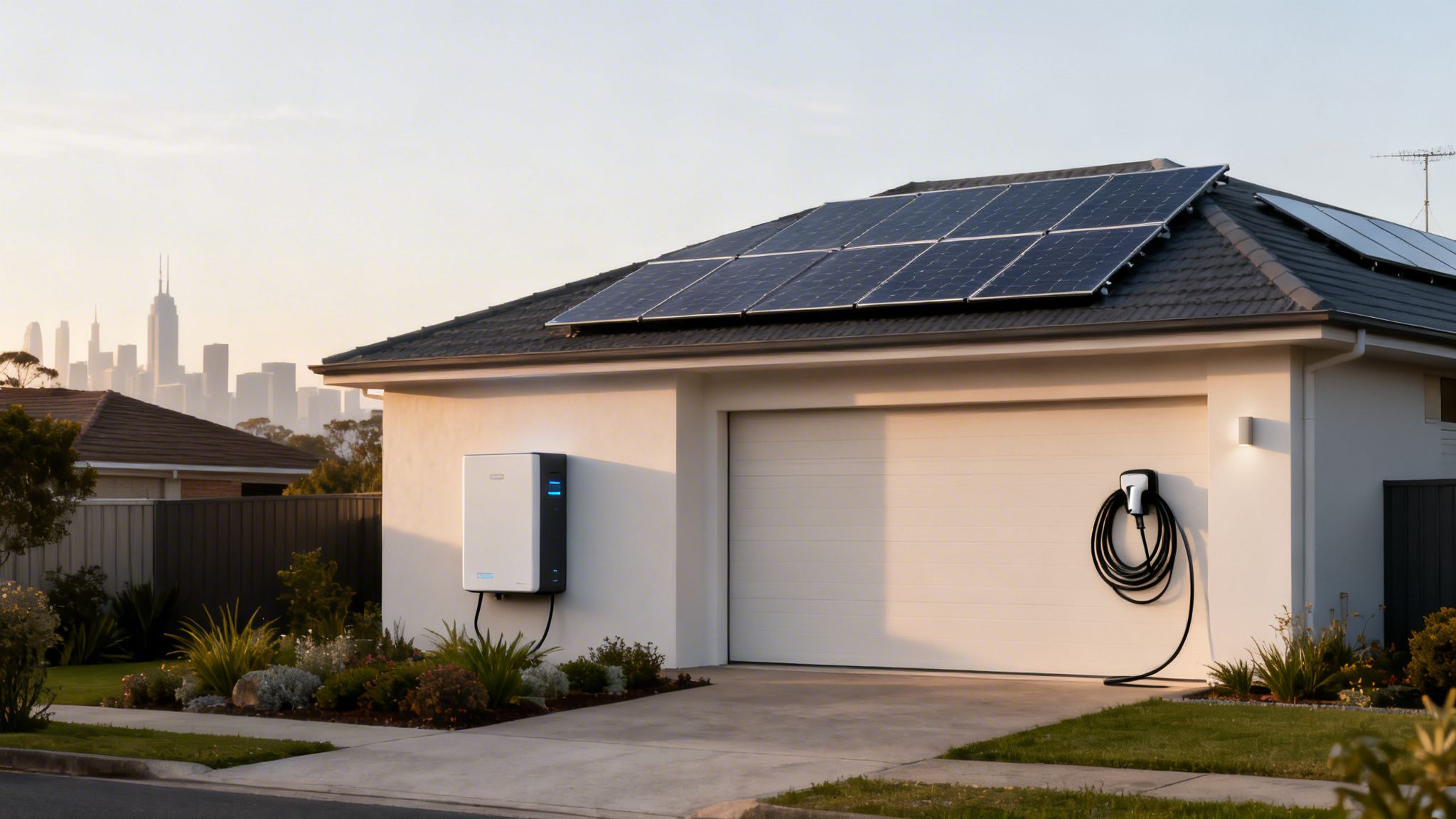
These days, a residential solar installation is the foundation of a complete home energy ecosystem. The real power is unlocked when you pair your panels with a solar battery and an EV charger, turning your home into a self-sufficient energy hub.
Solar Panels: High-efficiency solar panels are your personal power plant, converting sunlight into free, clean electricity to run your home during the day. This is the first step to dramatically reducing your reliance on the grid.
Solar Batteries: A battery is your personal energy vault. It stores the excess power your panels generate during the day. Come nightfall or during a grid outage, you can draw on that stored energy instead of buying it from your retailer. This is the key to achieving true energy independence and maximizing your savings.
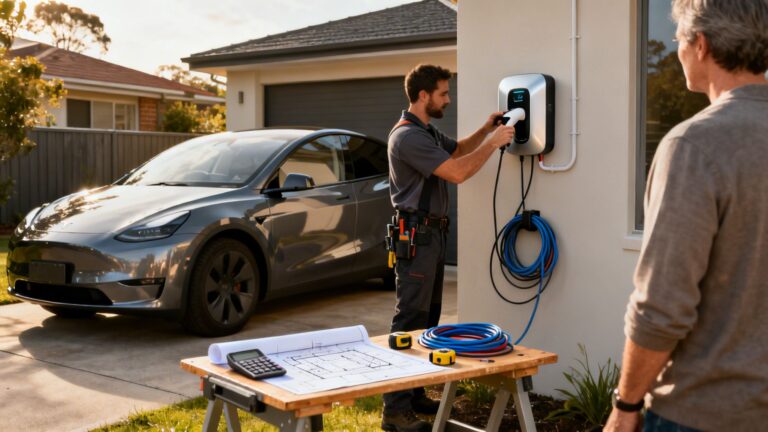
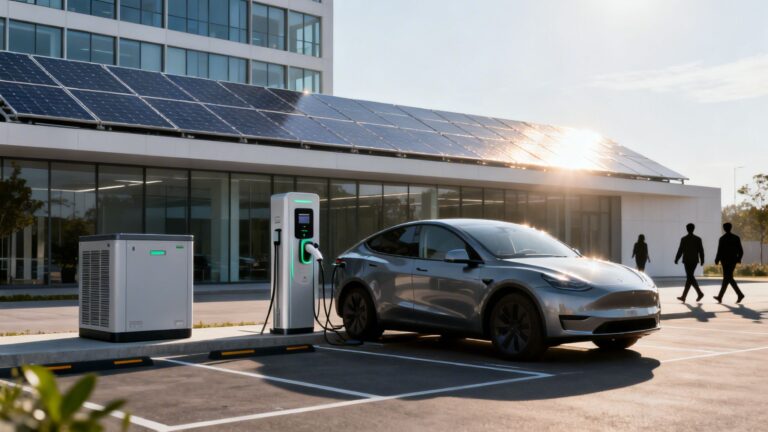
EV Chargers: If you own an electric vehicle, pairing it with a solar-powered home charger is a game-changer. You’re essentially filling up your car with sunshine for free. It’s the perfect combination of sustainable transport and clean energy, eliminating petrol costs from your budget.
A key tactic many Sydney homeowners use is to divert your excess solar to things like your hot water system. This ensures every single kilowatt-hour your panels produce is put to good use, maximising your investment.
When you bring all these pieces together, a residential solar installation in Sydney becomes the intelligent core of a more resilient, cost-effective, and future-proof home. You get serious bill savings, rock-solid energy security, and a much smaller carbon footprint—all while adding real value to your property.
Before you even think about picking up the phone to call a solar installer, it's worth doing a little bit of homework. Spending an hour now will save you a ton of hassle later.
When you're armed with some basic info about your own home and energy use, you can have a much more productive chat with solar companies. It helps you steer the conversation away from generic, one-size-fits-all packages and toward a system that’s actually right for your family.
The idea is to gather some real-world data about your property and lifestyle. This groundwork is what allows a good installer to design a system that will give you the best financial returns.
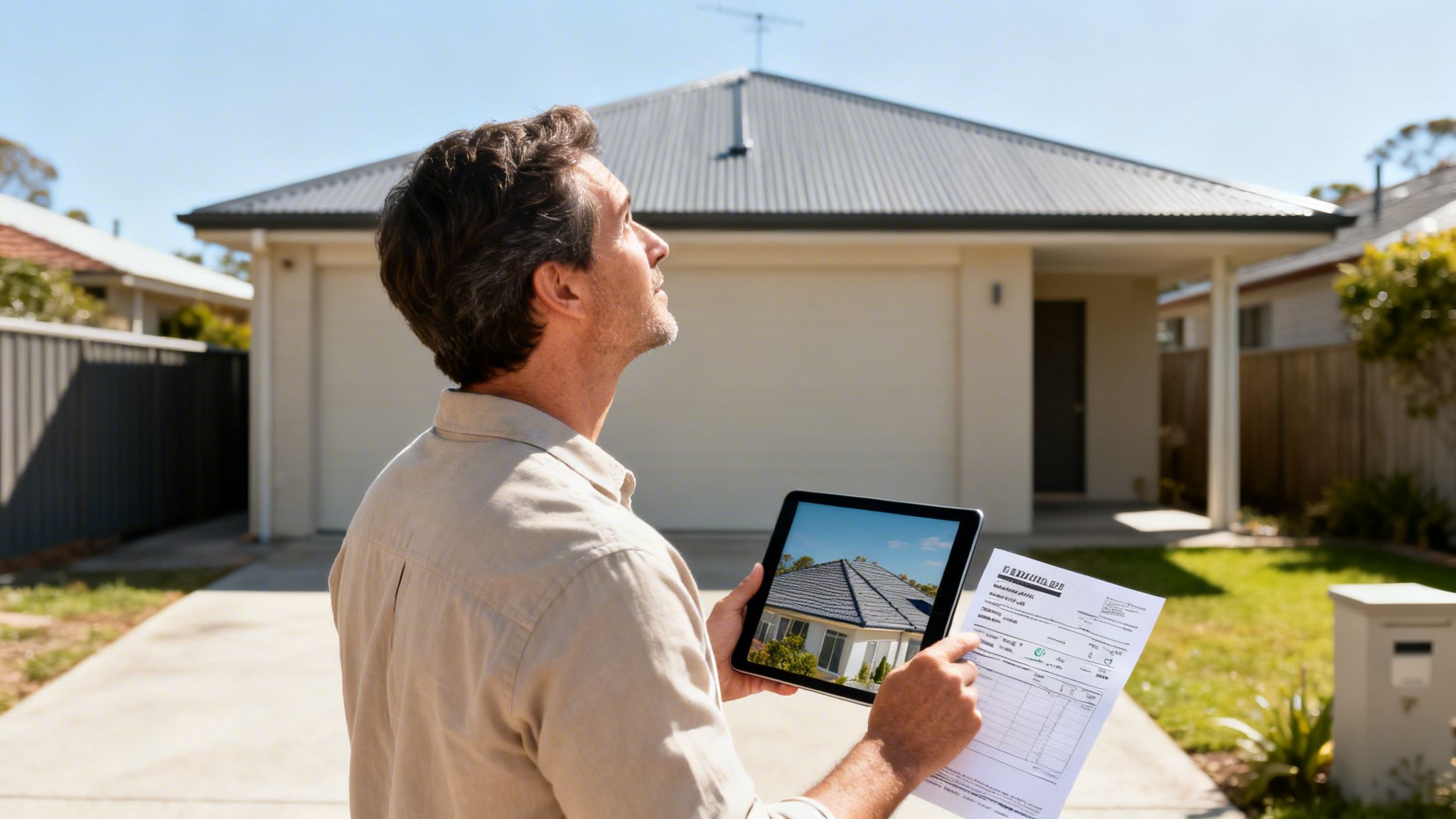
Get Friendly With Your Energy Bills
Your quarterly electricity bills are an absolute goldmine. They tell the story of how and when your household chews through power, which is the single most important factor in designing a solar system that actually saves you money.
Go grab your last few bills. The first number you're hunting for is your average daily usage in kilowatt-hours (kWh). This is the starting point for figuring out how big your solar system should be. A family using 25 kWh a day has very different needs from a couple using 15 kWh.
Next, look for the patterns. Do your bills skyrocket in summer thanks to the air con? Or does winter heating send them through the roof? Pinpointing these peak times helps a quality installer design a system—often with a battery—to knock out your most expensive grid electricity usage.
When you know your numbers, you can walk into a quote meeting and say, "We use about 22 kWh a day, mostly in the afternoon. What's the best way to tackle that?" It completely changes the conversation.
This is especially true for anyone looking at a residential solar installation in Sydney. New South Wales is Australia's solar powerhouse, with the highest total installed capacity and over 1.1 million rooftop systems. That boom is fuelled by our sunny climate and painfully high electricity prices, which makes getting your system size right from the get-go absolutely critical.
Check Out Your Roof's Solar Potential
Your roof is about to become your personal power station, but not all roofs are created equal. A quick look can tell you a lot about whether it's cut out for the job.
First up, orientation. In Sydney, a north-facing roof is the gold standard. It gets the most direct sun all day long, generating the maximum amount of power. But don't despair if that's not you – east and west-facing roofs are also brilliant. An east-facing array is great for capturing that morning sun, while a west-facing one soaks up the afternoon rays, which is often when households use the most power.
Next, play spot the shade. Do you have big leafy trees, a towering neighbour's house, or even a chimney that could cast a shadow over your roof during the day? Even a little bit of shading can seriously kneecap a solar panel's output, so it pays to be realistic about any obstructions.
Finally, give your roof a quick health check. Is it getting on in years? Are the tiles or Colorbond sheets in good nick? It is far, far easier to get any roof repairs done before you install a couple of dozen solar panels on top of it. A quality installation isn't just about the panels; it's about making sure the structure underneath can support them for the next 25+ years. You can learn more about how installation quality affects your system's value and why we take it so seriously.
To make things easier, here's a quick checklist to run through before you start getting quotes.
Solar Readiness Checklist for Your Sydney Home
Use this checklist to get a clearer picture of your home's solar suitability. It will help you ask the right questions when you speak with an installer.
| Assessment Area | What to Check | Why It Matters |
|---|---|---|
| Energy Usage | Your average daily kWh from past bills. | This is the primary factor for sizing your system correctly. |
| Roof Orientation | Which direction your largest roof sections face. | North is optimal, but east/west are also great for targeting usage times. |
| Shading Issues | Trees, antennas, or other buildings causing shadows. | Shading reduces energy production and needs to be factored into the design. |
| Roof Condition | The age and state of your tiles or metal sheeting. | A sound roof is essential for a secure, long-lasting installation. |
| Available Space | The clear, unobstructed area available for panels. | This determines the maximum physical size of the system you can fit. |
Taking a few minutes to go through these points puts you in a much stronger position. You'll have a better understanding of what you need and what’s possible for your home.
Understanding Solar Rebates and Approvals in NSW
Let's talk about the financial incentives and the paperwork. It sounds complicated, but it's actually where solar starts to look like an incredible investment for any Sydney homeowner.
These incentives aren't just bureaucratic hurdles; they're designed to make switching to clean energy a much easier financial decision.
The biggest saving you'll get comes straight from the federal government. It's called the Small-scale Renewable Energy Scheme (SRES), and it provides a massive upfront discount on the total cost of your solar system.
This discount works through something called Small-scale Technology Certificates (STCs). The number of STCs you get depends on your system's size and where you live.
It's crucial to realise this isn't a cash rebate you apply for later. Your accredited installer handles everything. They claim the STCs for you and apply the value as an immediate point-of-sale discount, lowering the price you pay from day one.
This federal scheme alone makes a huge difference, but in NSW, the support often doesn't stop there.
NSW Government Support and Initiatives
While the federal STC program is the main discount everyone gets, the NSW Government also pushes for clean energy solutions with its own programs. These initiatives tend to be more targeted, often focusing on battery storage or EV chargers to help build a stronger, more resilient grid.
We've seen programs in the past offer specific support for homeowners adding a battery, which helps you store your solar power and use it at night. It's always worth checking the latest NSW Government rebates that pop up, as they can change.
Any good installer keeps a close eye on these state-level incentives. They’ll be able to tell you if any current programs apply to your project, making sure you don't leave any money on the table. For a deeper dive into this, check out our detailed guide on solar rebates and government incentives in NSW.
Demystifying Grid Approvals in Sydney
Before a single panel goes on your roof, your installer has to get the green light from your local electricity network. For most of Sydney, that means dealing with either Ausgrid or Endeavour Energy, who are known as Distributed Network Service Providers (DNSPs).
This step is called grid connection pre-approval, and it's non-negotiable. Your installer submits an application with all the technical details of your proposed system. The DNSP then reviews it to make sure your new system will play nicely with the local grid.
The process is there for a few good reasons:
- Ensures Grid Stability: It stops too much solar power from flooding a small area at once, which could cause voltage problems for you and your neighbours.
- Sets Export Limits: Approval for most residential systems is pretty straightforward. For larger or more complex setups, the DNSP might place a limit on how much excess energy you can sell back to the grid.
- Guarantees Compliance: It’s a final check to confirm your system meets all the technical and safety rules the network requires.
The best part? You don't have to touch any of this paperwork. A professional solar installer manages the entire DNSP application for you. They know the exact requirements for a residential solar installation in Sydney and will handle the whole process, ensuring your system gets approved without any headaches.
Getting your solar system and installer choice right is the single most important decision you'll make on your solar journey. Get it right, and you’ve got a high-performing asset that saves you money for decades. Get it wrong, and you're in for a world of headaches.
A great residential solar installation in Sydney comes down to nailing both of these from the very beginning. This is where you shift from research into real-world action, finding a partner who will not only supply quality gear but also stand behind their work for the life of the system.
Why Your Installer Is More Important Than Your Panels
It might sound backward, but the company you choose is often more critical than the specific brand of panels they install.
Think about it: a top-tier panel installed poorly will underperform and could even be a safety risk. On the other hand, a good, reliable panel installed with precision by an experienced team will deliver consistent power for 25 years or more.
The first non-negotiable is accreditation. Only ever work with a Clean Energy Council (CEC) Accredited Installer. This is the absolute gold standard in Australia, proving the installer has the training and skills to design and fit your system safely and correctly. Always ask for their accreditation details and check them on the CEC website yourself.
Beyond that, look for signs of a stable, professional operation:
- In-house Teams: Companies using their own licensed electricians and installers—not just subcontracting the work out—have far better control over quality and timelines.
- Physical Sydney Presence: An installer with a local office, warehouse, and showroom in Sydney (like our home base in Chipping Norton) is accountable. You know exactly where to find them if you need support.
- Proven Track Record: You want a company with years of hands-on experience in the Sydney market. They’ll know the local network rules, council requirements, and unique weather patterns inside and out.
A truly professional installer isn't just there to make a sale. They're a long-term energy partner, focused on designing a system that actually meets your needs—not just selling you the box with the biggest margin.
Understanding Your System's Core Components
Once you have a shortlist of reputable installers, the conversation will quickly turn to the hardware. A solar power system has two main brains: the panels and the inverter.
Solar Panels Technology
Panels do the heavy lifting, turning sunlight into DC electricity. While there are a few technologies out there, most modern installations use high-efficiency monocrystalline panels. They perform better in low light and are more space-efficient, meaning you get more power out of a smaller roof area.
For a closer look at what makes a great panel, you can explore our in-depth review of a market-leading brand like JA Solar.
The Critical Role of the Inverter
If the panels are the muscles, the inverter is the brain. This device converts the DC electricity from your panels into the 240V AC electricity your home actually uses. It’s one of the hardest-working parts of your entire system.
The inverter's quality directly impacts performance and reliability. A cheap, unreliable inverter is the most common point of failure in a solar installation, period. Insist on a quality brand that has a strong Australian-based warranty and support team.
Future-Proofing with Batteries and EV Chargers
A modern residential solar installation is about more than just daytime savings. It’s about building a complete home energy ecosystem. This is where solar batteries and EV chargers have become so important.
A solar battery simply stores the excess solar energy your panels generate during the day. Instead of sending it to the grid for a tiny credit, you can use that stored energy at night. It’s the key to powering your home with free sunshine 24/7 and maximising your energy independence.
Likewise, integrating an EV charger lets you power your electric vehicle directly from your roof, turning your car into an extension of your home's clean energy system.
This forward-thinking approach is fast becoming the norm. Sydney's solar boom has accelerated dramatically, with NSW leading the charge in new capacity—a massive 321 MW was installed in just the first half of 2025. Average system sizes have also swelled to 10.9 kW as homeowners go for bigger arrays to cover 70-100% of their needs, helped by NSW's high solar irradiance of over 4.5 kWh/m²/day.
Choosing an installer who is genuinely experienced in these integrated systems is non-negotiable if you want to get it right.
Your Installation Journey: From Site Survey to Flipping the Switch
Once you’ve settled on an installer and your system components, the real action begins. This is where the paper plans get turned into a power-generating reality on your roof. A quality installation isn’t just about getting the panels up; it’s about precision, safety, and a seamless transition to clean energy with minimal fuss for you and your family.
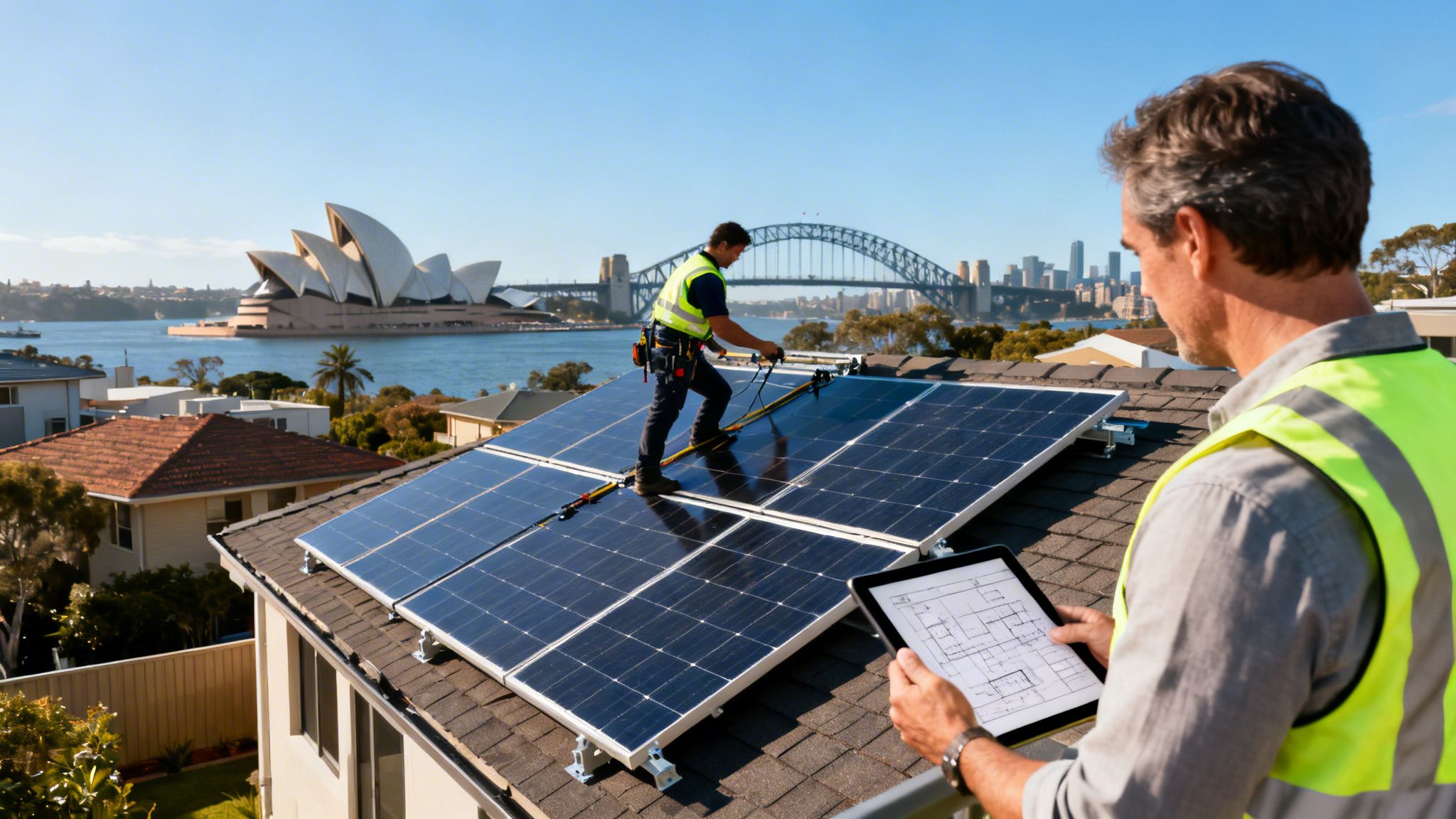
It all starts well before any tools come out, with the on-site technical survey. This is non-negotiable. A qualified solar technician needs to get up on your roof to confirm that the initial design actually works in the real world. They’ll take precise measurements, check the roof's structural integrity, and have a good look at your electrical switchboard.
This survey is what locks in the final design. It’s the last chance to make sure the panel layout is perfect, the cable runs will be neat and tidy, and that everything will connect safely with your home’s existing wiring.
This is the point where you truly partner with your installer to make the final calls on the hardware and the team you're trusting with your home.
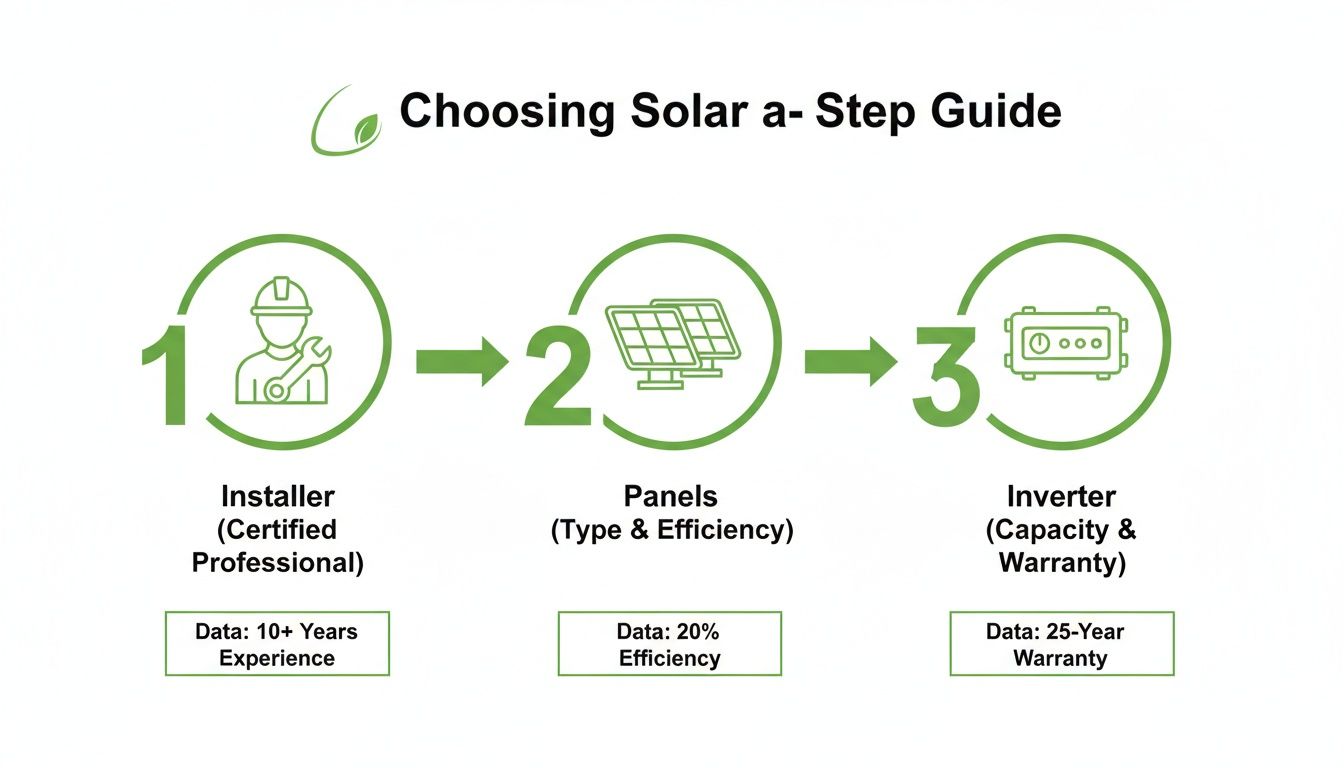
Think of it this way: the installer, the panels, and the inverter are the three pillars of a successful project. Get any one of them wrong, and the whole thing can feel wobbly.
What Happens on Installation Day
With the final design locked in, it's time to book the install. For most Sydney homes, the physical work is surprisingly fast—usually taking just one or two days. A professional in-house team will show up with everything they need, ready to go.
Here’s a rough rundown of what to expect:
- Safety First: The day starts with setting up safety gear. This means roof anchors, harnesses, and guard rails to make sure the entire job is done safely and meets all Australian standards.
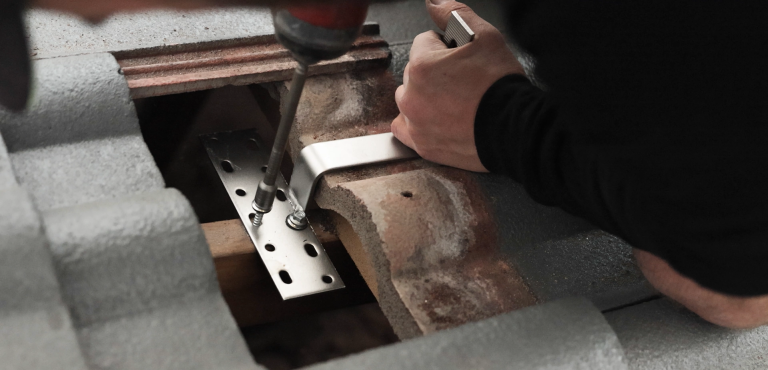
- Rails Go On: Next, the team securely fastens the mounting rails to your roof rafters. This is the skeleton that will hold your panels in place for decades.
- Panels & Inverter: The solar panels are then carefully mounted onto the rails. At the same time, the inverter is installed, usually in the garage or on a shaded wall outside. A licensed electrician handles all the critical wiring.
The team will need to shut your power off for a short time to safely connect the solar system to your switchboard. A good crew will give you plenty of warning and keep the power outage as brief as possible.
The real mark of a quality installation is the little things. It’s the neat and tidy cable management, leaving the worksite cleaner than they found it, and being respectful of your home and family throughout the day.
Getting Connected and Activated
Once the panels are on the roof and the inverter is wired up, there’s one last piece to the puzzle before you can start sending power to the grid: the smart meter. Your installer handles all the paperwork with your electricity retailer, who then schedules a technician to either install a new meter or reconfigure your existing one for solar.
This part can sometimes take a couple of weeks, depending on how busy the retailers are. But once that new meter is in, your installer can come back to perform the final commissioning and flick the switch.
This is also the perfect time to think about energy independence. In NSW, which already boasts a national-best 8 GW of solar capacity, pairing your panels with a battery is a trend that's absolutely exploding. Across the country, an incredible 183,245 home batteries were installed in the second half of 2025 alone—a fourfold increase from 2024. At the same time, the average new PV system size climbed to a robust 10.9 kW.
Our battery-integrated packages, installed by our licensed team (#329360C), are designed to give you exactly that—backup power during blackouts and clean energy to charge your EV overnight. You can dive deeper into the latest Australian solar statistics to see just how fast this shift is happening.
The final handover is the moment you've been waiting for. Your installer should walk you through the entire system, show you how to use the monitoring app on your phone, and give you a complete handover pack. This should contain all your warranties, manuals, and important compliance certificates, leaving you feeling confident and in control of your new power station.
Your Top Solar Questions, Answered
Going solar in Sydney brings up a lot of questions. We get it. To help clear things up, we’ve put together straight answers to the most common queries we hear from homeowners every day.
How Long Does a Residential Solar Installation Actually Take?
The work on your roof is surprisingly quick. A good, experienced in-house team will typically have your entire system mounted and wired in just one or two days.
The whole process from signing the contract to flicking the switch, however, takes a bit longer—usually a few weeks. This timeline accounts for essential grid connection approvals and getting a new smart meter installed by your electricity retailer. A professional installer manages all this for you, keeping you in the loop the entire time.
What Happens to My Power During a Blackout?
This is a fantastic question. A standard, grid-connected solar system is designed to automatically shut down during a power outage. It's a critical safety feature that protects utility workers who might be out there repairing the power lines.
If you’re looking for true energy independence, this is where a solar battery comes in. By pairing your panels with a battery, you create your own private power reserve. When the grid goes down, your home can automatically switch over to the battery, keeping the fridge cold, the lights on, and your devices running.
For many Sydney families, adding a battery isn't just about convenience; it's about security and peace of mind. It ensures your home remains a safe, powered haven during unexpected blackouts.
Do I Need to Clean My Solar Panels?
Sydney's weather is a big help here. The regular rainfall does a pretty good job of washing away most of the dust and grime that builds up. Because of this, solar panels are remarkably low-maintenance.
We generally recommend a professional clean every one to two years to keep them running at peak performance. This is especially true if you live near the coast where salt mist builds up, or in a particularly dusty part of the city. Beyond that, a quality system installed by a reputable company comes with comprehensive warranties on the parts and the workmanship, giving you long-term confidence.
Can I Add a Solar Battery or EV Charger Later On?
Absolutely. This is a key advantage of choosing a quality installer who thinks about the future. While it’s often simpler to install everything at once, we can easily design your initial system to be "battery-ready" or "EV-ready" from day one.
This involves making a few smart choices at the start:
- Choosing a Hybrid Inverter: This type of inverter is built to work with both solar panels and a battery, which makes adding storage down the track a seamless and cost-effective process.
- Planning the Electrical Layout: Our team will plan the wiring and switchboard setup to accommodate a battery or EV charger in the future without needing a major rework.
The key is to discuss your long-term goals—like buying an electric car in the next few years—during your initial consultation. This ensures your residential solar installation in Sydney is an investment that grows with your family's needs. If you have more specific questions, you can find a wealth of information in our frequently asked questions section.
Ready to take control of your energy bills and future-proof your Sydney home? The expert team at Interactive Solar is here to help you design the perfect solar, battery, or EV charging solution. Contact us today for a free, no-obligation consultation.