Your Guide to a Flawless EV Charger Installation in Sydney
Sydney is embracing the electric vehicle revolution, and for EV owners, a reliable home charger is the key to unlocking true convenience. A professional EV charger installation in Sydney eliminates the daily scramble for public charging stations, letting you wake up to a fully charged car every single morning.
This guide is your complete roadmap to getting a seamless installation, future-proofing your home, and taking full control of your energy. Let's explore how you can make the switch to effortless home charging.
Your Essential Guide to EV Charging in Sydney
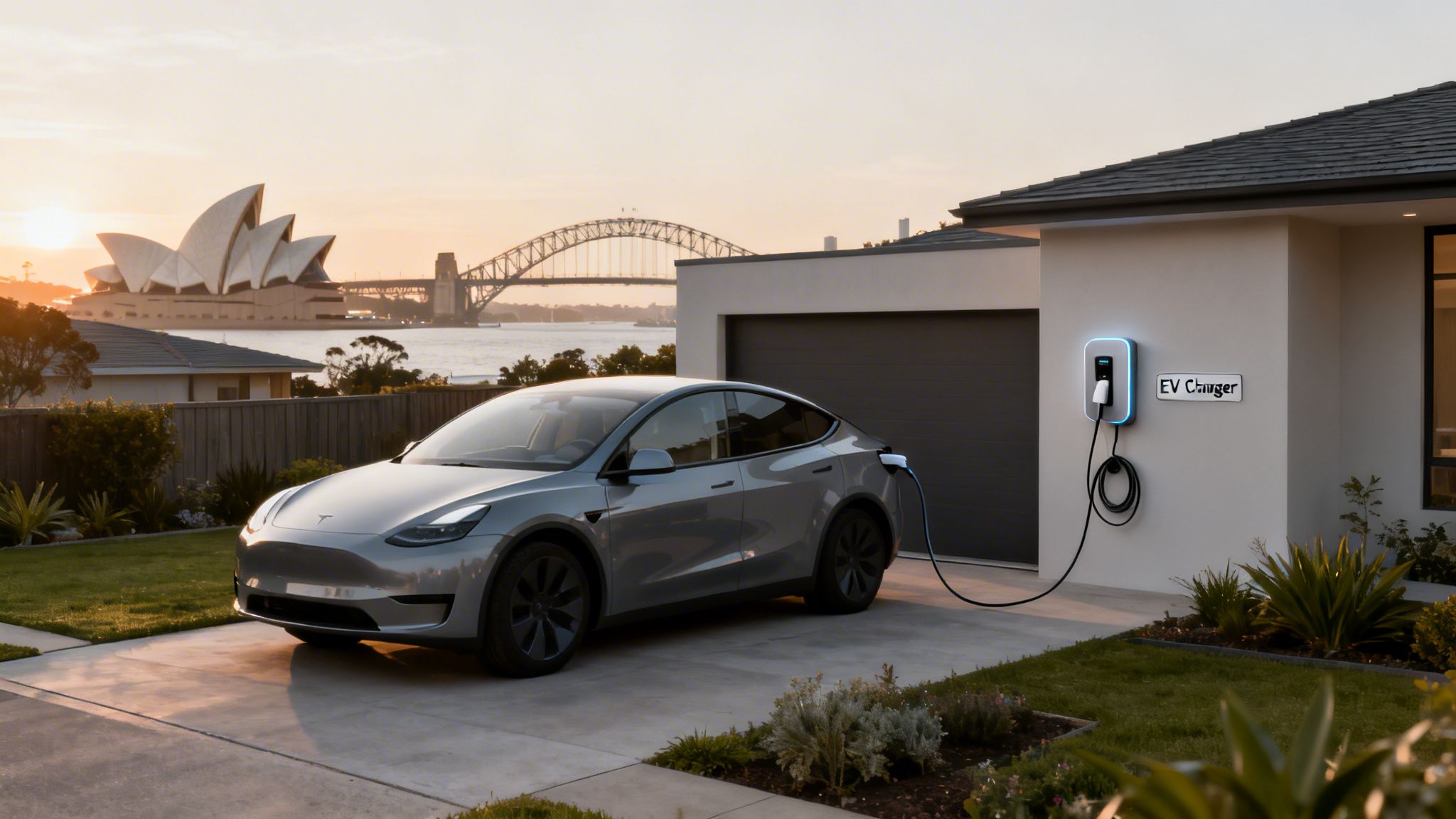
The shift to EVs across Sydney is accelerating, driven by lower running costs, a superior driving experience, and a smaller environmental footprint. But the ultimate convenience of EV ownership begins the moment you plug in at home. Relying solely on public chargers can be a frustrating game of wait times and out-of-order stations.
A dedicated home charger transforms your experience, making it as simple and routine as charging your phone overnight.
This guide cuts through the complexity, turning what seems like a technical project into a series of clear, manageable steps. We'll cover everything from the initial site inspection to the final handover. If you're new to the tech, it helps to understand the basics of an Electric Vehicle Charging Station to get familiar with the core components.
What This Guide Covers
Our goal is to provide a practical plan for making smart, informed decisions. We’ll walk you through selecting the perfect charger for your car and lifestyle, navigating NSW and strata regulations, and even show you how to pair your charger with solar panels for the ultimate advantage: driving on sunshine.
This is about more than just charging your car; it’s about creating your own personal energy ecosystem.
By planning your home charging setup thoughtfully, you not only ensure maximum convenience but also significantly reduce your long-term transportation costs, making your switch to electric both smart and sustainable.
Throughout this guide, we'll focus on what truly matters for a successful installation, so you'll feel confident working with a trusted local expert. You'll learn about:
- Charger Types and Power Levels: We’ll break down the difference between a slow overnight top-up and much faster charging options.
- Local and Strata Requirements: Get a clear picture of the compliance steps needed for a smooth, legal installation anywhere in Sydney.
- Solar and Battery Integration: This is the game-changer—how to use the sun to power your car, often for free.
- The Installation Process: A straightforward, step-by-step look at what to expect on the day.
- Choosing a Licensed Installer: We’ll give you the key questions you need to ask to ensure a safe, high-quality setup.
Consider this your roadmap to making your EV charger installation in Sydney a seamless and rewarding experience.
Choosing the Right Charger for Your Sydney Home
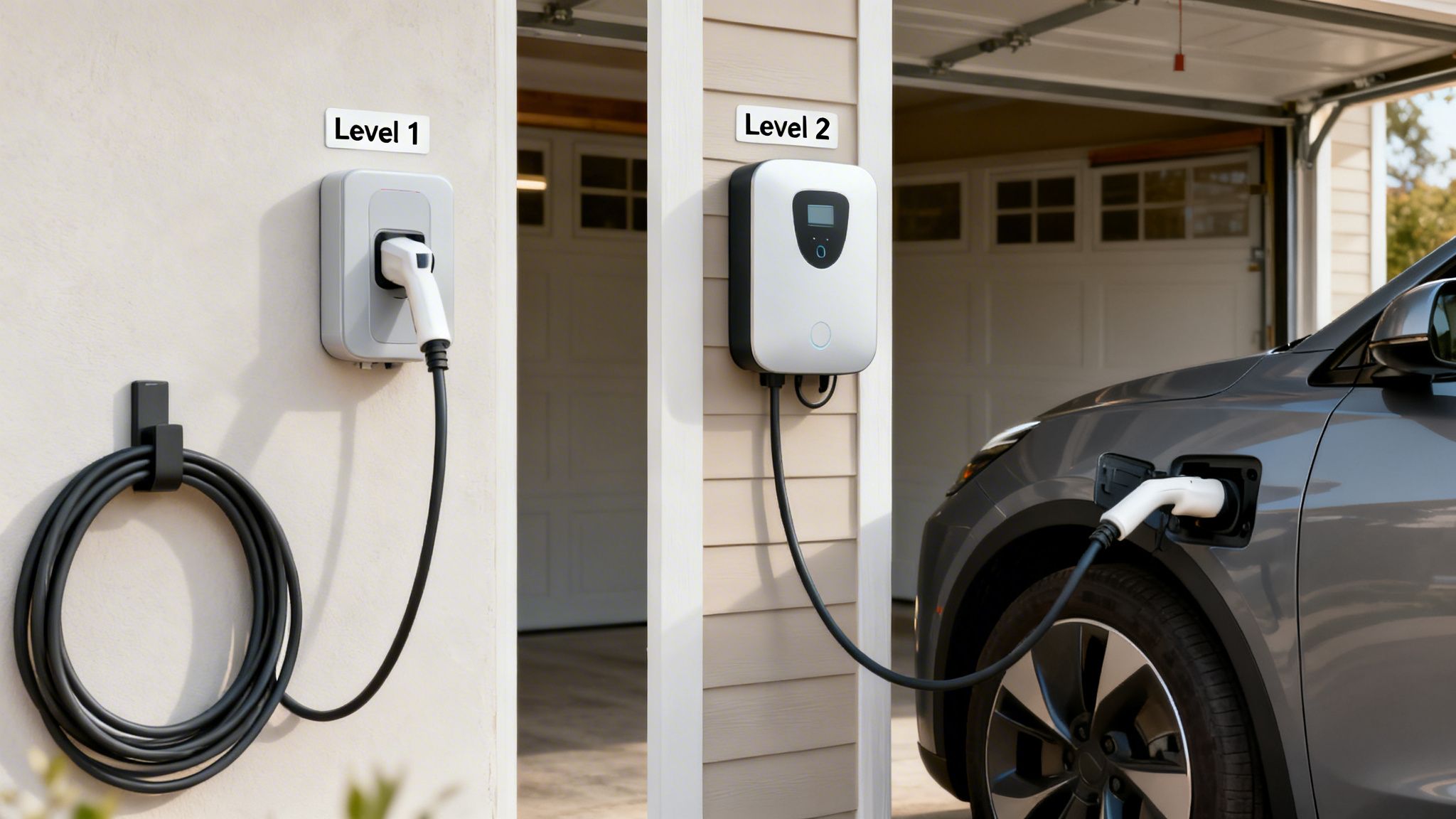
Stepping into the world of EV chargers can feel a bit technical, but it really boils down to one simple idea: speed. Think of it like the difference between a garden hose and a fire hose—both deliver water, but one gets the job done a lot faster. EV chargers are the same, delivering power at different rates to match your car, your home’s wiring, and your daily driving habits.
For home charging in Sydney, you'll almost always be looking at an AC (Alternating Current) charger. The super-fast DC (Direct Current) chargers you see at public stations are built for rapid refuelling on the go, but an AC unit is perfect for the most common scenario: plugging in overnight and waking up to a full battery.
AC Chargers: Level 1 vs Level 2
When it comes to your EV charger installation in Sydney, the main choice you’ll make is between a Level 1 and a Level 2 charger. They each have their place, but one is the clear winner for most homeowners.
- Level 1 Chargers: This is essentially a trickle charge. These are the portable units that plug into a standard 10-amp wall socket. They're incredibly slow, adding only about 10-20 km of range per hour of charging.
- Level 2 Chargers: This is the go-to solution for a proper home setup. These are dedicated, wall-mounted units that a licensed electrician connects directly to your switchboard. The difference is night and day—they deliver around 40-70 km of range per hour.
A Level 1 charger might work if you barely drive or just need a backup, but for the typical Sydney driver, a Level 2 charger is the only practical option. It guarantees your car is ready for whatever the day throws at you. For a closer look at some of the top models, check out our guide to finding the best home EV charger for your specific needs.
Decoding Power kW Ratings and Home Wiring
To get your head around charging speed, you need to understand kilowatt (kW) ratings. A charger's kW rating is a direct measure of how much power it can send to your car's battery.
A standard wall socket (Level 1) puts out about 2.4kW. A typical single-phase Level 2 charger, on the other hand, delivers 7.4kW—that’s more than three times the power and three times the speed.
Some Sydney properties have access to three-phase power, which opens the door to even faster 11kW or 22kW chargers, but this is far less common for residential homes.
Your home’s electrical system—specifically whether it’s single-phase or three-phase—will determine the maximum power your new charger can deliver. A professional installer will assess this during your initial site visit to recommend the best and safest option.
This site check is non-negotiable. An expert needs to look at your switchboard’s capacity to ensure it can safely handle the sustained electrical load from an EV charger. This isn’t just about getting the fastest charge; it’s about protecting your entire home.
A Quick Comparison of Home EV Charger Types
This table compares common AC charging levels to help you decide which is right for your Sydney home, vehicle, and driving habits.
| Charger Level | Typical Power Output | Charging Speed (km of range per hour) | Best For |
|---|---|---|---|
| Level 1 | 2.4 kW | 10–20 km/hr | Occasional use, plug-in hybrids with small batteries, or as a backup charging option. |
| Level 2 | 7.4 kW (Single-Phase) | 40–70 km/hr | The standard for daily home charging, ensuring a full battery overnight for most EV models. |
| Level 2 | 11-22 kW (Three-Phase) | 70–140 km/hr | Homes with three-phase power, larger battery EVs, or households with multiple electric cars. |
In the end, it’s all about matching the charger to your lifestyle. For the vast majority of Sydney EV owners, a 7.4kW Level 2 charger is the sweet spot. It offers the perfect blend of speed, convenience, and electrical safety, effectively turning your garage into your own private petrol station—minus the petrol, of course.
Navigating Sydney and NSW Installation Rules
Getting an EV charger installed in Sydney is usually a pretty smooth process, but knowing the local rules is key to making sure everything is done safely and by the book. The good news? For most standard home installations, you won’t get bogged down in complex council development applications.
There's one rule, however, that’s non-negotiable: all installation work must be carried out by a licensed electrician. Once they're finished, they have to give you a Certificate of Compliance for Electrical Work (CCEW). This isn't just a piece of paper—it's your official guarantee that the installation is safe and meets all Australian standards.
Think of the CCEW as peace of mind. It confirms that every part of the job, from the wiring inside your walls to the final connection, sticks to the strict electrical codes we have here in NSW.
The Challenge of Strata Properties
If you live in an apartment, townhouse, or any building managed by a strata scheme, things get a little more complicated. You can't just go ahead and install a charger; you’ll need to get the green light from your owners corporation or strata committee first.
Thankfully, NSW has brought in laws to support EV owners in strata buildings, which stop committees from unreasonably blocking an installation. The process usually looks something like this:
- Submit a Proposal: You'll need to put together a clear plan showing where the charger will go, which model you've chosen, and how the wiring will be routed.
- Get a Quote from a Qualified Installer: The owners corporation will want to see a professional quote from a licensed and insured company, like Interactive Solar.
- Address Power Management: The committee will likely have questions about the building’s total electrical capacity. A good installer can assess this and offer solutions if the grid is under strain.
Getting approval is all about clear communication and a solid plan. Working with an installer who has experience with strata projects makes a world of difference because they know exactly what the committee needs to see.
Switchboard Upgrades in Older Sydney Homes
So many of Sydney's beautiful older homes were built decades before anyone was thinking about electric cars. As a result, their original switchboards were never designed to handle the heavy, continuous electrical load an EV charger needs to draw.
During your initial site assessment, a licensed electrician will check your switchboard to see if it has the capacity and modern safety switches (like RCDs) required. If it’s outdated or already maxed out, an upgrade will be necessary.
A switchboard upgrade isn't just an expense; it's a critical investment in your home's safety and future. It doesn't just enable a safe EV charger installation—it brings your entire electrical system up to modern standards, protecting your family and all your appliances.
For period homes across Sydney, this upgrade is a common and vital part of the EV charger installation Sydney process. Getting it right is crucial for safety and compliance. Understanding how to size circuit breakers is a key part of this, ensuring the new circuit can handle the load without any risk.
Companies like Interactive Solar make this easy by providing clear, upfront quotes and managing the entire process with our own in-house licensed electricians. We make sure every job complies with AS/NZS 3000 standards and issues a Certificate of Electrical Safety.
Working with an accredited installer also means you’re protected by industry best practices. You can learn more about the standards we follow by reading our article on what is the New Energy Tech Consumer Code (NETCC).
Integrating Your EV Charger with Solar Panels
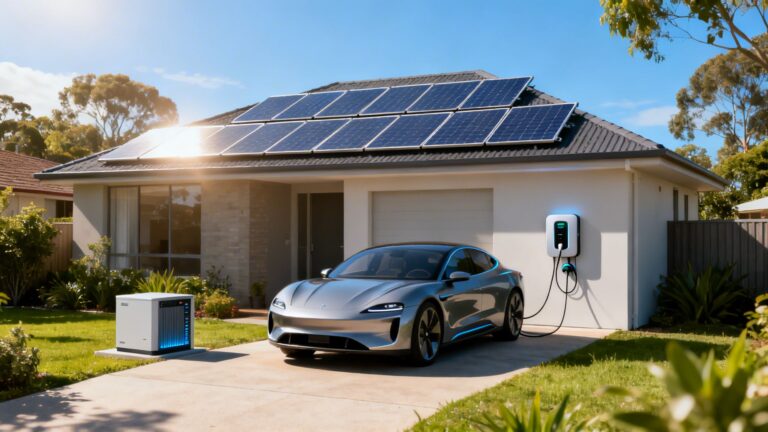
Pairing an EV charger with a solar panel system is the final piece of the puzzle for true energy independence. It’s like having your own private, clean fuel station right on your roof. You get to power your car with sunshine, completely bypassing the grid when the conditions are right.
The biggest win is simple: you can charge your EV for free. When your solar panels are making more electricity than your home is using—usually during the sunniest part of the day—that excess energy has to go somewhere. A smart EV charger can automatically spot this surplus and send it straight to your car's battery.
This is what we call solar self-consumption. Instead of sending that valuable, self-generated power back to the grid for a tiny credit, you use it yourself. This offsets one of your biggest household costs: transport. For anyone planning an EV charger installation in Sydney, adding solar is the best way to get the most out of your investment.
Smart Charging and Solar Diversion
The key to making this work is a "solar-aware" or smart EV charger. These aren't just fancy power outlets; they actually talk to your solar system to make intelligent decisions on when and how to charge.
They give you complete control with a few different modes:
- Eco Mode: This mode only uses spare solar energy to charge your car. If a cloud rolls in and your solar generation dips, the charger simply pauses until there’s enough excess power again. It’s perfect for weekend charging when you’re not in a hurry.
- Boost Mode: This is the best of both worlds. It uses your surplus solar power but tops it up with a little juice from the grid to make sure your car is charged by a specific time. You get free energy, balanced with convenience.
- Full Speed Mode: Need a full battery, fast? This mode pulls the maximum power from both your solar panels and the grid at the same time to get the job done as quickly as possible.
This smart management means you're always using your solar energy in the most efficient way possible, which dramatically cuts how much you rely on the grid to power your car.
The Role of a Solar Battery
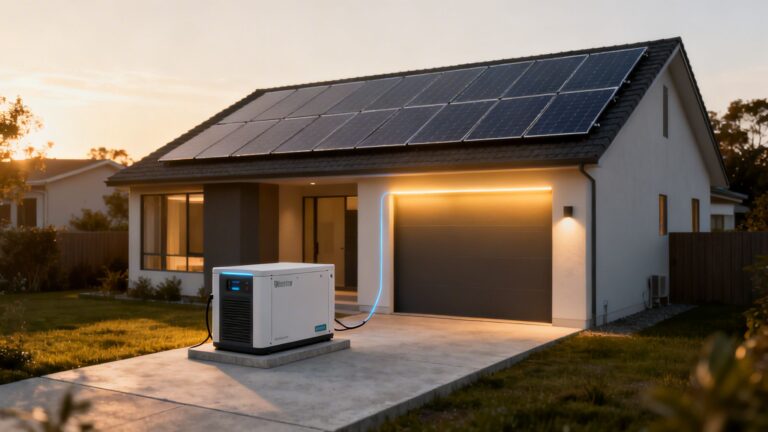
Adding a solar battery to the mix takes this setup to a whole new level. While your solar panels are busy generating power during the day, a battery lets you store all that free, clean energy to use whenever you want.
A solar battery is like your own personal energy reserve. It banks all the excess solar power your panels produce during the day, saving it so you can charge your car overnight or run your home during the evening peak—all without touching the grid.
This gives you ultimate freedom. You can get home from work, plug in your car, and let it charge overnight using the sunlight you collected hours earlier. It completely separates your charging schedule from daylight hours, giving you total flexibility and maximising your savings. This whole system is managed by a central 'brain', usually a high-quality inverter. For example, understanding the benefits of a SolarEdge inverter shows you how these components work together to direct energy exactly where it’s needed.
A solar battery also means backup power. If a blackout hits your Sydney neighbourhood, a properly set-up battery system can keep your lights on, the fridge cold, and even your EV charging. It's not just about saving money; it’s about building resilience. By combining solar panels, a battery, and an EV charger, you create a fully independent energy loop for both your home and your car.
The Professional Installation Process Step by Step
Getting an EV charger installed can feel like a big electrical project, but it’s actually a straightforward process when handled by professionals. It's not just about bolting a box to the wall; it’s a carefully planned sequence designed for safety, compliance, and your complete peace of mind.
We’ve broken the whole thing down into four clear stages. This way, you know exactly what’s happening and when, from our first chat right through to your first charge. No surprises, just a clean, professional job.
Stage 1: Initial Consultation and Site Assessment
It all starts with a conversation. We need to understand your daily driving habits, the type of EV you have, and what you’re looking for in a charger. This helps us get a feel for your needs before we even step foot on your property.
Next comes the most important part: the on-site assessment. One of our licensed electricians will visit your Sydney home to get a hands-on look at your electrical system. They’ll check your switchboard’s capacity, figure out the best and safest path for the new cabling, and help you pinpoint the perfect spot for the charger. This step is non-negotiable for a safe EV charger installation in Sydney—it’s where we spot any potential roadblocks, like an outdated switchboard, early on.
Stage 2: Custom Design and Quote
Once the assessment is done, we get to work designing a setup that’s built specifically for you. This is never a one-size-fits-all solution. The design will factor in your car’s charging speed, your home’s unique electrical layout, and even your future plans, like adding solar panels down the track.
You’ll then receive a detailed quote that breaks everything down—the charger, materials, labour, and any other necessary work. It's all transparent, with no hidden fees, so you have a crystal-clear picture of the investment from the start.
Stage 3: The Installation Day
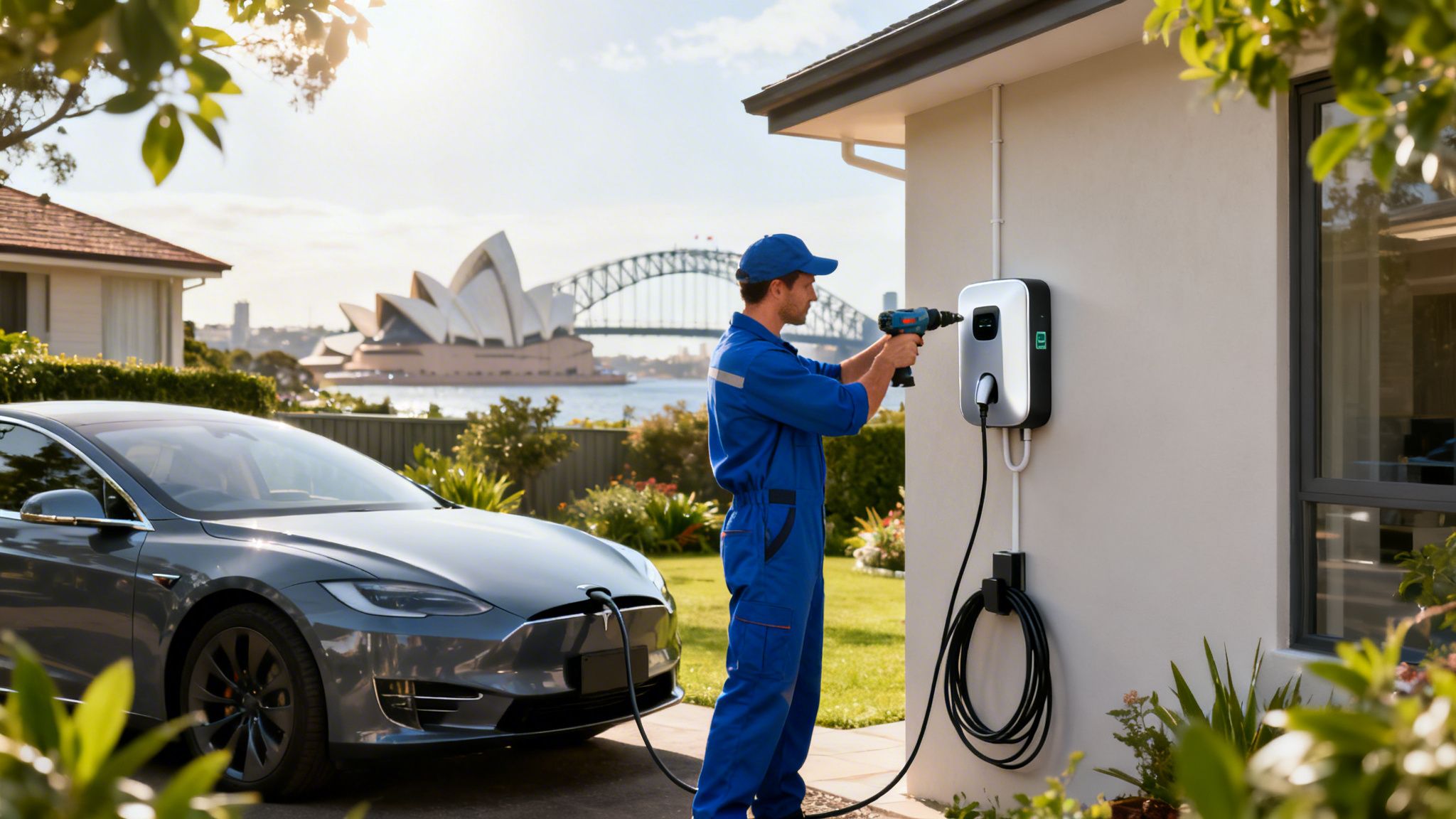
On the day of the installation, our in-house, licensed electricians will get straight to work. The first job is always to install a new, dedicated circuit on your switchboard. This is essential, as EV chargers draw a high, continuous load of power, and they need their own circuit to operate safely.
From there, they’ll run the heavy-duty cabling from the switchboard to the charger’s location, making sure it’s secured neatly and safely out of the way. Finally, they’ll mount the EV charger, connect it to the new circuit, and run a full suite of tests to ensure it’s working perfectly and meets all Australian electrical standards.
Stage 4: Final Handover and Demonstration
The job isn't finished once the tools are packed away. We’ll walk you through your new charger, showing you exactly how it works, including any smart features or app controls. We want you to feel completely confident using your new system from day one.
You’ll also receive your Certificate of Compliance for Electrical Work (CCEW), which is your official guarantee that the job was done safely and to the highest professional standards. Quality work is everything for long-term performance, and you can learn more about our commitment to quality installations you can have the most advanced solar system installed but if the installation quality is subpar is it truly valuable.
This is where you can start thinking about the bigger picture, especially if you have solar.
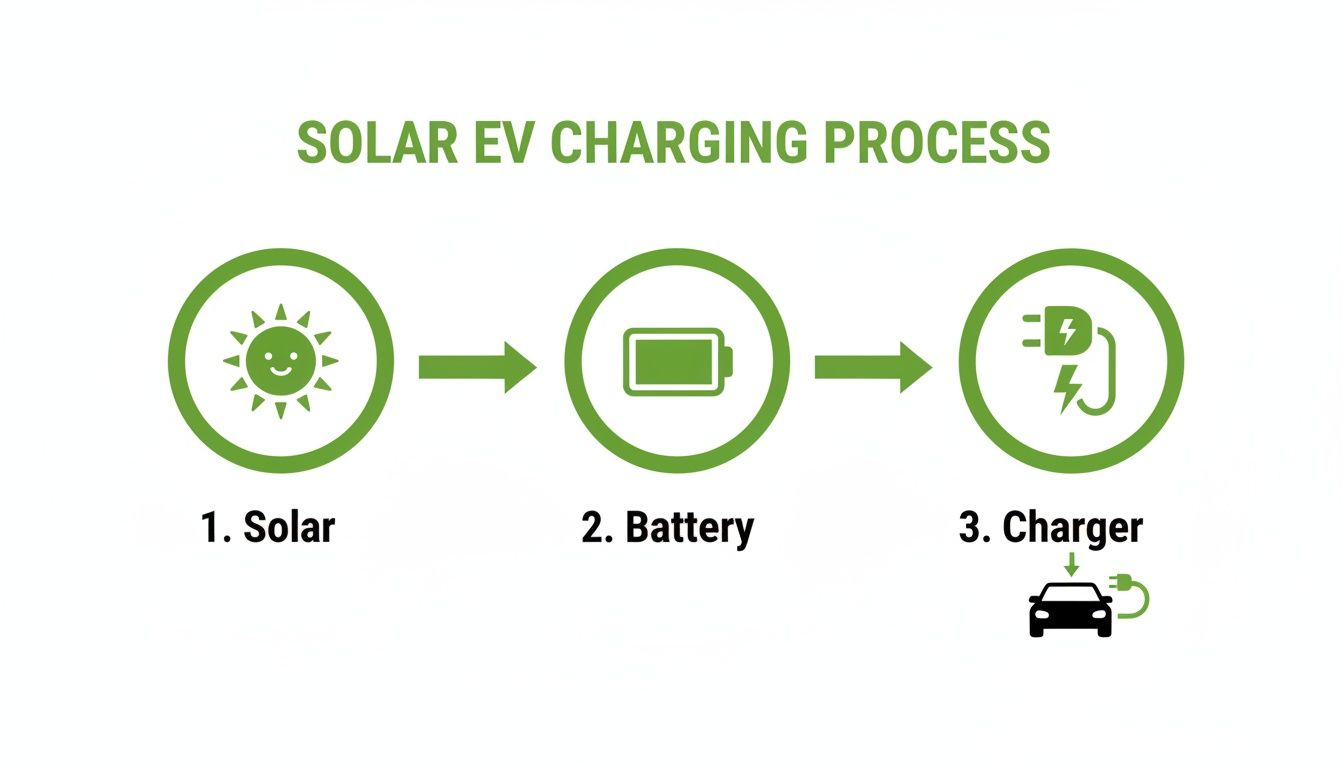
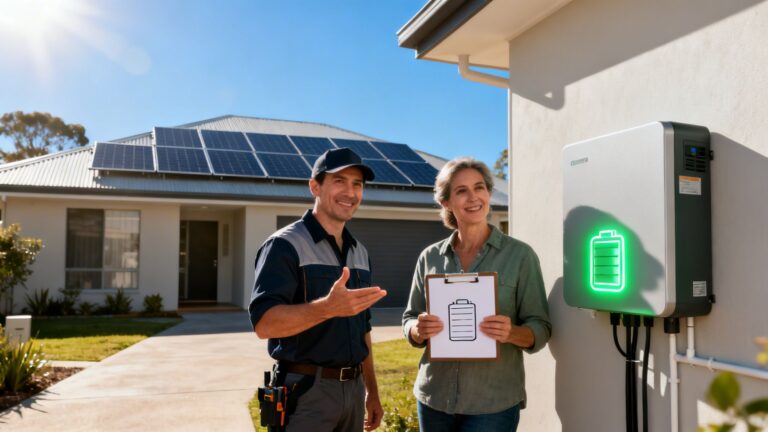
Pairing your EV charger with a solar and battery system means you can power your car with free, clean energy from the sun. The energy flows from your panels to your home battery, and then straight into your car, creating a truly self-sufficient and sustainable way to drive.
Finding the Right Licensed Installer in Sydney
The best EV charger in the world is only as good as its installation. The quality of the install determines the safety, reliability, and long-term performance of your entire system, so this isn't a step you want to rush.
Choosing the right partner for your ev charger installation in Sydney is a critical decision. A lot of electricians can run a new power point, but not all of them have the specific experience needed for this kind of specialised work. You need an expert who gets the nuances of EV charging, from smart load management right through to the software.
Your Installer Checklist
Before you sign off on anything, it’s worth asking a few direct questions. It doesn't take long, and the answers can tell you a lot about their experience and professionalism. Here’s what you should be asking:
- Can I see your NSW electrical licence? Always start here. Ask for their electrical contractor licence number and run a quick check online. It’s a simple step that ensures they are fully qualified and legally allowed to do the work.
- What's your experience with EV chargers? Don't be shy. Ask them what brands they work with most and how many similar jobs they’ve done. This isn't the kind of work you want someone learning on.
- Are you insured? They must have current public liability insurance. This is your safety net, protecting you and your property in the unlikely event that something goes wrong during the installation.
Getting these basics right is non-negotiable for a safe, compliant setup.
Warranties and After-Sales Support
A professional installation doesn't just end when the electrician packs up their van. Knowing what warranties and support you're getting is crucial for your peace of mind down the track.
Be sure to ask about two different warranties: the manufacturer's warranty on the charger itself, and the installer's own workmanship warranty. A reputable company will stand by their work for years to come and have a clear process for any after-sales support you might need.
This tells you they’re confident in their skills and are in it for the long haul, not just a one-off job. If you ever have a question or an issue, you'll know exactly who to call.
In-House Teams vs. Subcontractors
Here’s one of the biggest differentiators you'll find between providers: whether they use their own in-house electricians or farm the work out to subcontractors. A company with a dedicated in-house team almost always offers a better experience.
When the same company that designs and sells you the solution is the one installing it, the whole process is just smoother. There are no communication gaps, the technicians are experts on the specific products they install, and you have a single point of contact from start to finish. It’s an integrated approach that leads to a higher standard of workmanship and a much less stressful experience for you.
Frequently Asked Questions About EV Charger Installation
It's completely normal to have a few questions floating around before you commit to an EV charger install. Let's tackle some of the most common ones we hear from Sydney homeowners, so you can move forward with confidence.
How Long Does a Standard Installation Take?
You might be surprised to learn that a standard home EV charger installation is usually done and dusted in just 2 to 4 hours.
Of course, this can shift a little depending on the specifics of your home—things like how far the charger is from your switchboard or if the board itself needs an upgrade. We’ll give you a rock-solid timeline after our initial site visit.
Do I Need a Special Electrician?
Legally, any licensed electrician in NSW can do the work. But an EV charger isn't just another power point, and you'll want someone who truly specialises in them.
An experienced EV installer knows the specific load requirements, how to configure smart charging features, and the best practices for different models. This expertise is what guarantees a safe, efficient, and compliant setup that gets the most out of your charger for years to come. For more on this, check out our detailed frequently asked questions page.
What If My Switchboard Is Old?
This is one of the most common things we see in older Sydney homes, and it’s absolutely nothing to worry about. Our installers will assess your switchboard’s capacity right at the start.
If it needs an upgrade to handle the extra electrical load safely, our in-house team manages the entire process. We’ll make sure your home’s electrical system is brought up to modern standards, future-proofing your property and making it ready for reliable EV charging.
Government incentives for energy technology are always evolving. While NSW has previously offered rebates for EV purchases, specific programs for home charger installations can change.
Your best bet is to always check the official NSW Government or Energy Saver websites for the most up-to-date information. A good installer will also be across any current schemes and can advise you on potential savings at the time of your quote.
Ready to take the next step towards convenient, at-home EV charging? The team at Interactive Solar is here to provide a seamless, professional installation tailored to your home and vehicle. https://interactivesolar.com.au