Your Guide to Electric Vehicle Charging Station Installation Costs
So, you're thinking about installing an electric vehicle charger? It’s a smart move, but one of the first questions on your mind is undoubtedly the cost. The reality is, the final electric vehicle charging stations installation cost isn't a single, flat-rate figure.
Think of it as a final tally made up of a few key parts. The total investment depends on the charger you pick, your home’s current electrical setup, and the specific work a licensed professional needs to do to get it all running safely. This guide is designed to walk you through every factor, so you can make an informed decision for your home.
What Determines Your EV Charger Installation Cost
Let's pull back the curtain on the bottom line. The final price for an EV charger installation isn’t just one number; it’s a total of several key factors working together. It’s a bit like building a custom PC—the price shifts based on the components you choose and how complex the build is.
A professional on-site assessment is non-negotiable. Every property is different. A straightforward job in a modern garage with a new switchboard is a world away from a project at an older home that needs major electrical surgery just to get started.
Our goal here is to give you the knowledge you need to understand what you're investing in and why a personalised quote from a qualified installer is the only way to get an accurate cost.
The Main Cost Components
Your total investment is driven by three core things: the charger hardware, the professional labour, and any electrical upgrades your property might need. Each one is critical for a safe, compliant, and efficient charging setup.
- Charger Hardware: This is the EV charging unit itself. Just like cars, chargers come in all shapes and sizes, with different features like smart charging, solar integration, and power output. Choosing the right one is the first step.
- Installation Labour: This covers the time and expertise of a licensed electrician. They’ll run dedicated wiring, install the unit, and make sure everything is up to Australian Standards, ensuring a safe and reliable installation.
- Electrical Upgrades: This is the catch-all for any work needed to prep your home’s electrical system. It could be a switchboard upgrade, new safety switches, or even enhancing your grid power supply to handle the new load.
This diagram breaks down how these three key areas contribute to the final cost.
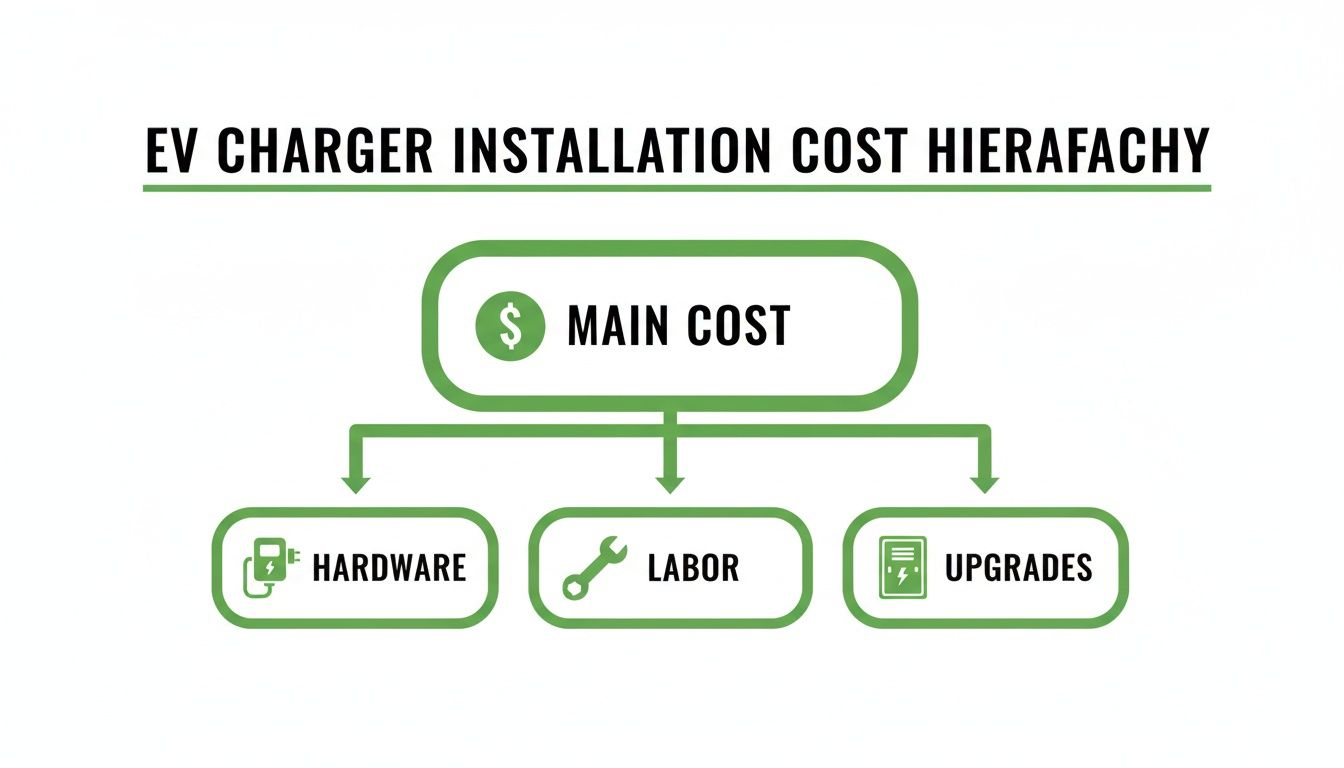
As you can see, the final investment is a blend of hardware, labour, and site-specific work. That's exactly why a simple flat rate just doesn't work for a quality installation.
To help you get a clearer picture of where your investment goes, we’ve broken down the key factors that influence your final installation cost. This table outlines each component, what it covers, and why it's so important for the final quote.
Key Factors Influencing Your EV Charger Installation Cost
| Cost Component | What It Covers | Why It Matters for the Final Cost |
|---|---|---|
| Charger Hardware Cost | The purchase price of the EV charging unit itself. | Costs vary based on brand, power (7kW vs 22kW), and smart features (Wi-Fi, solar integration). A basic unit is more affordable, while a premium smart charger unlocks significant long-term savings. |
| Electrician Labour | The time and expertise of a licensed Level 2 electrician for a standard installation. | A straightforward installation near the switchboard takes less time and is more cost-effective. Complex cable runs, wall mounting, and testing add hours and increase the labour component. |
| Switchboard Condition | The state of your main electrical panel. | An older switchboard may lack space or modern safety features (RCDs), requiring a partial or full upgrade. This is a common and significant factor for ensuring a safe installation. |
| Cable Run Distance | The distance from your switchboard to the charger's location. | The longer the run, the more expensive copper cable is needed. A 5-metre run is much more affordable than a 20-metre run that has to go through walls or underground. |
| Site Complexity | The difficulty of running the cable and mounting the charger. | Drilling through double-brick walls, trenching across a garden, or working in tight roof spaces all add significant time and labour to the job, influencing the overall investment. |
| Power Supply Phase | Whether your home has a single-phase or three-phase power supply. | Most homes have single-phase power, limiting them to 7kW chargers. To get a faster 22kW charger, you need a three-phase supply, which is a major upgrade if you don't already have it. |
Understanding these variables is key to having a realistic budget. A simple job might only involve the first two components, while a more complex one at an older property could easily involve all six.
Understanding Price Variations in NSW
With EV ownership surging in NSW, especially in Sydney's suburbs, installation costs can swing quite a bit. The final quote depends heavily on the complexity of the job. A basic setup right next to the switchboard is one thing; a more involved project needing trenching and a new panel is another entirely.
For a professional installer, pricing these variables accurately is everything. To nail down the true cost of an EV charger installation, using modern tools like construction estimating software is crucial for creating precise quotes that factor in all the job-specific details.
Of course, choosing the right hardware is the first decision you'll make. Before you even call an installer, it helps to know what you want. Check out our guide on the best home EV charger to explore different models and their features. It’ll help you make an informed decision right from the start.
Breaking Down Your Charger Hardware and Labour Costs
When you get a quote for an electric vehicle charging station installation cost, you’re really looking at two main things: the price of the charger itself and the cost of the professional labour to get it installed safely. Getting the balance right between these two is key to a smart investment that works for you now and down the road.
Think of it like buying a new phone. You could get a basic model that just makes calls and sends texts, and it does the job. Or, you could invest in a smartphone that connects to your life with apps, smart features, and endless possibilities. EV chargers aren't so different.
What You’re Paying for in a Charger
Your first big decision is the charger hardware. They’re not all the same, and what you choose will have a direct impact on the final cost. For home charging, the main choice comes down to a standard Level 2 charger or a much more capable 'smart' charger.
Standard Level 2 Chargers: These are the reliable workhorses. They’re straightforward, efficient, and charge your car a whole lot faster than a standard wall plug. If you just want to plug in and forget it, this is your no-frills option.
Smart Level 2 Chargers: This is the smartphone equivalent. By connecting to your home Wi-Fi, these chargers let you control everything from an app on your phone, unlocking some seriously powerful features.
The real game-changer with a smart charger is scheduling. You can tell it to only charge during cheap off-peak electricity hours or—even better—when your solar panels are pumping out free energy. This turns your charger from a simple appliance into a powerful tool for managing your home’s energy costs.
This extra brainpower delivers serious long-term value, especially if you have a solar system. You can see how these features come together by checking out the different EV chargers that are designed to work hand-in-hand with modern home energy setups.
The Non-Negotiable Cost of Professional Labour
The other major piece of the puzzle is the labour cost for a licensed electrician. This is so much more than just screwing a box to the wall. The investment reflects the skill, safety standards, and compliance that only a professional can guarantee.
Think of it this way: you wouldn’t let just anyone mess with your home’s plumbing, right? You hire a master plumber to make sure water flows perfectly with zero risk of leaks. An electrician does the same for electricity, ensuring it flows to your EV safely and efficiently, with no shortcuts.
Here’s what that labour cost actually covers:
A Dedicated Circuit: Your EV charger needs its own circuit running straight from your switchboard. This gives it a clean, safe power supply and stops it from tripping the power for the rest of your house.
Essential Safety Devices: The electrician will install a specific safety switch, like a Residual Current Device (RCD), which is legally required by Australian standards. It’s a critical piece of hardware that protects you from electrical faults.
The Right Wiring: Professionals use the correct thickness of wire designed to handle the high, continuous power your charger will draw for hours on end. Using wire that’s too thin is a serious fire hazard.
Full Compliance Testing: Once everything is installed, the entire setup is rigorously tested to make sure it meets all local and Australian Standards. This is your guarantee that the system is safe and reliable.
At the end of the day, the labour component of your quote is buying you peace of mind. It’s the assurance that a high-powered electrical appliance has been installed correctly by a certified expert who stands behind their work. This is an absolutely non-negotiable part of any legitimate electric vehicle charging station installation cost.
Uncovering Potential Hidden Installation Costs
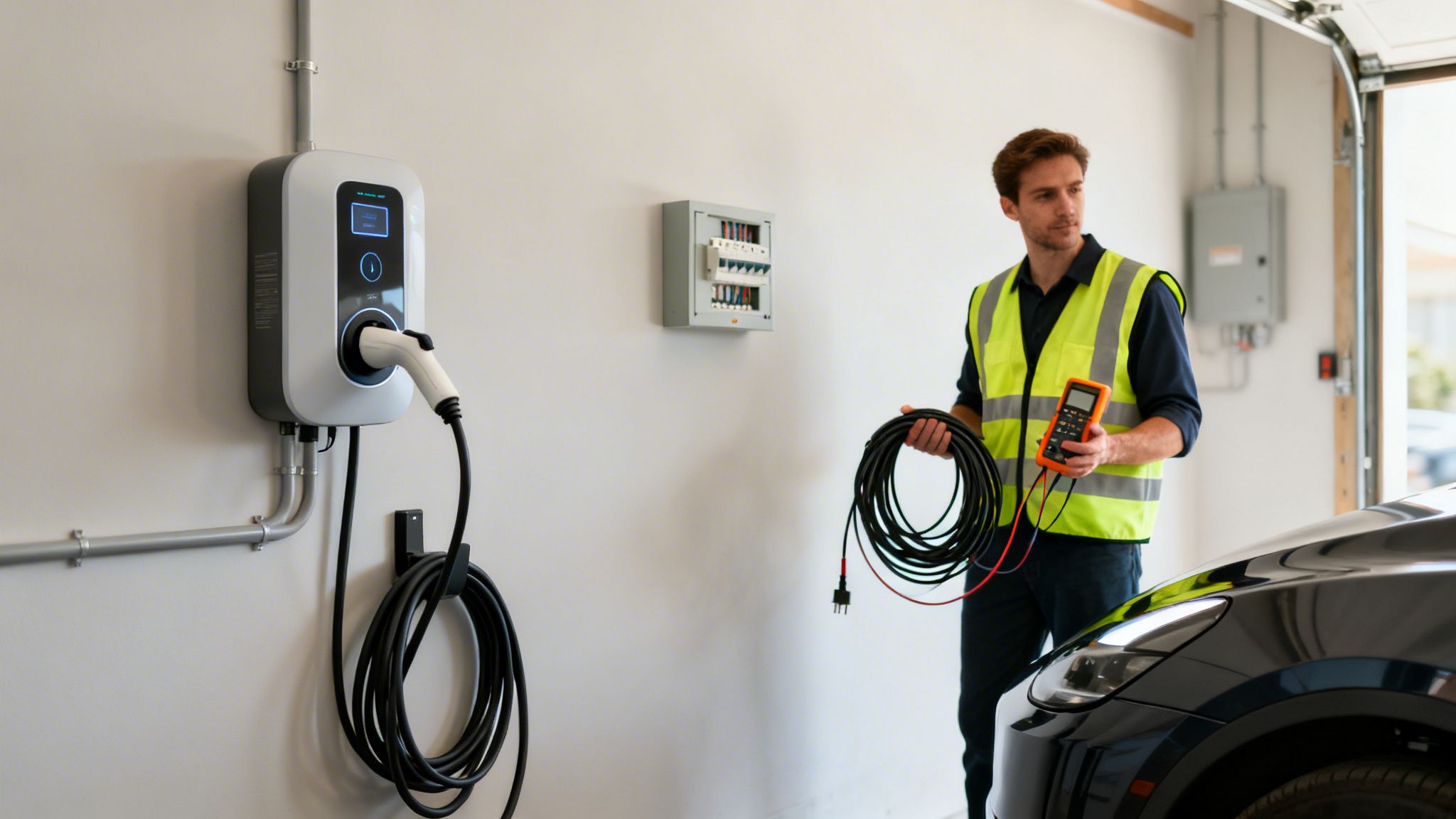
While the charger itself and standard labour form the core of your quote, the unique character of your property is where the real story unfolds. It’s in these site-specific details that a basic estimate turns into the true electric vehicle charging stations installation cost.
Think of it like renovating a kitchen. You budget for the shiny new benchtops and cabinets, but it's only when the walls come down that you discover the old, dodgy plumbing that absolutely has to be replaced.
A proper site assessment from an experienced electrician is designed to find those "what-ifs" before any work starts. This is how you avoid nasty surprises and get a quote that reflects the full scope of work for a safe, compliant installation. Knowing what to look for helps you have a much more productive chat with your installer.
Your Home's Electrical System
The single biggest wildcard in your installation cost is the state of your current electrical system. Your switchboard is the central hub for your home’s power, and it has to be up to the task of handling the hefty, sustained draw of an EV charger.
A professional electrician will always perform a load calculation before touching a single wire. This is a non-negotiable safety step. It determines if your existing panel can handle the new charger without being overloaded, which is a serious fire risk.
An older switchboard, especially one with old-school ceramic fuses or no spare slots for new circuits, will almost certainly need an upgrade. This isn't just an upsell; it’s a mandatory safety requirement to meet modern Australian Standards.
A full switchboard replacement is a significant job, but it’s the bedrock of a safe system that can support a high-power appliance like an EV charger for years to come. To get a better feel for why this meticulous approach is so critical, you can learn more about what goes into quality installations and see why cutting corners is never worth the risk.
Site-Specific Installation Challenges
Once the switchboard is sorted, the physical layout of your property comes into play. The distance and path from your switchboard to your desired charger location can introduce logistical hurdles that add labour and material costs.
Here are some of the most common variables we see on-site:
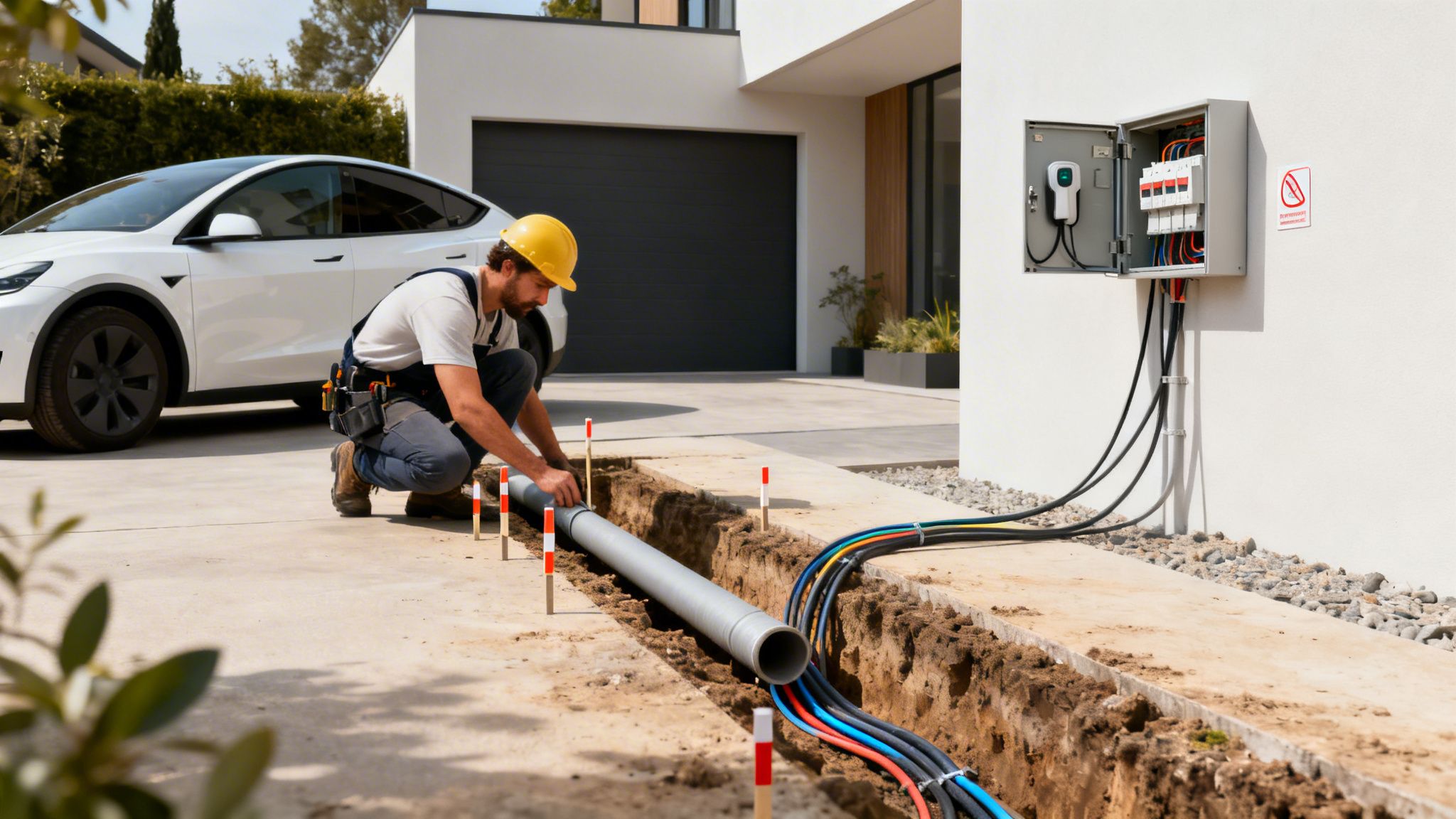
- Long Cable Runs: The further the charger is from the switchboard, the bigger the job. Running a thick, dedicated cable to a detached garage or the far end of the house means more materials and a lot more labour to route it safely through walls, ceilings, or even underground.
- Three-Phase Power Upgrades: Most Sydney homes run on single-phase power, which is perfect for a standard 7kW charger. But if you want the blistering speed of a 22kW charger, you’ll need a three-phase supply. Upgrading your home from single to three-phase is a major electrical project that involves your energy network provider (like Ausgrid or Endeavour Energy) and work that extends from the street to your switchboard.
- Difficult Cable Routing: Every house is different. An electrician might need to drill through double-brick walls, fish cables through tight ceiling cavities, or navigate around existing plumbing and ductwork. These complexities take time and skill, which is reflected in the cost.
- Trenching and Excavation: If the cable has to run underground to a carport or a freestanding pedestal charger, you’re looking at digging. Laying new conduits in areas with existing underground services is risky—hitting a water pipe or another utility line is an expensive mistake. Using specialised techniques like non-destructive digging can often prevent these costly accidents.
- Strata and Apartment Complex Rules: Getting a charger installed in an apartment building is a whole different ball game. It often means getting strata approval, navigating complex bylaws, and figuring out how to run wiring through common property, which can be a tricky and expensive process.
These factors make it clear why a one-size-fits-all price just doesn’t exist for charger installations. A good installer will provide a detailed quote that accounts for your property’s specific needs—that’s the sign of a true professional.
Pairing Your EV Charger with Solar Panels
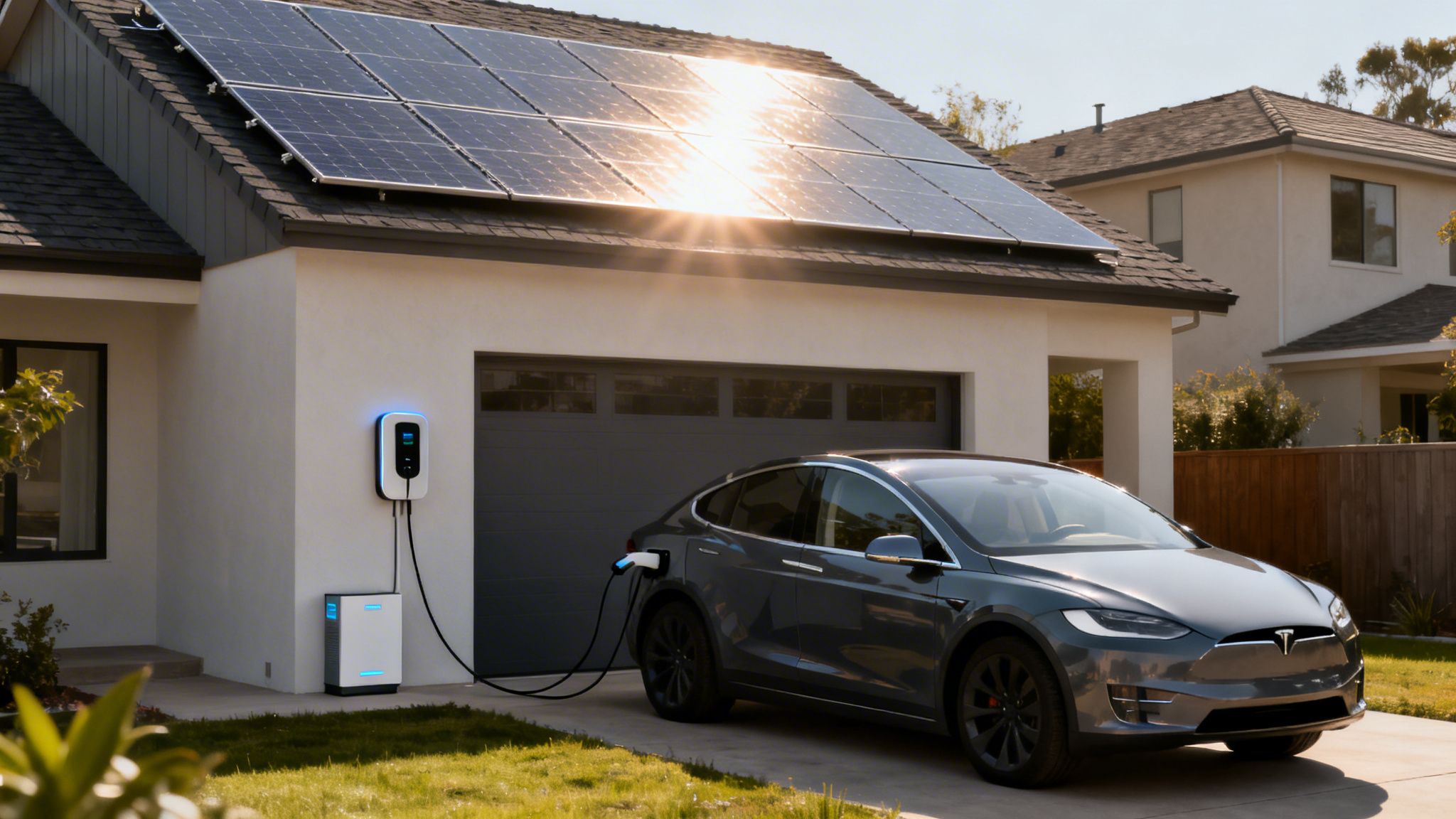
So far, we’ve been talking about the electric vehicle charging stations installation cost as a necessary expense. But what if you could turn that cost into a long-term investment that pays you back? That’s exactly what happens when you pair your EV charger with a home solar system. Suddenly, your home isn’t just a place to live—it’s your own private fuel station.
Imagine your roof generating clean, free electricity all day while you're at work. Instead of selling that power back to the grid for a pittance, a smart EV charger can automatically funnel it straight into your car’s battery.
You’re literally filling up your car with sunlight, completely sidestepping the ever-increasing cost of electricity from the grid. It’s a powerful setup that shifts the initial installation cost from a simple spend to a strategic move toward energy independence.
The Power of Solar Self-Consumption
The secret to making this all work is a simple idea called solar self-consumption. All it means is using the solar power you generate, as you generate it, right inside your own home. And your EV, being one of the hungriest "appliances" you'll ever own, is the perfect candidate to soak up all that free energy.
On a sunny day, your solar panels will almost always produce more power than your home is using at that moment. This extra power is where the magic happens. Without a smart system, you’d be forced to export it to the grid for a tiny feed-in tariff.
A smart EV charger flips this on its head. It keeps an eye on your home's energy use and, the moment it detects surplus solar power, it starts funnelling that free electricity into your car. It effectively captures that energy before it ever has a chance to leave your property.
This ensures every kilowatt-hour your roof produces works for you first—powering your home and then fuelling your car. Over the life of your system, the impact on your electricity bills is massive. You're cutting your reliance on the grid for both your home and your transport.
Creating the Ultimate Energy Trifecta with a Solar Battery
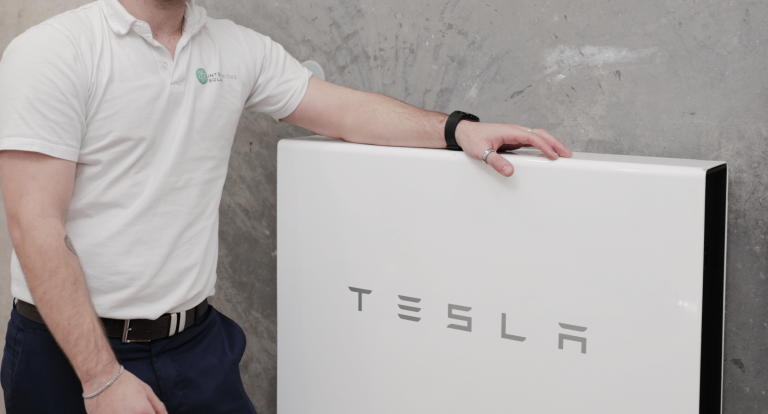
Charging with free solar during the day is brilliant, but what about cloudy days or charging overnight? This is where adding a home solar battery to the mix creates the ultimate energy setup: solar panels, a battery, and your EV charger.
Think of a solar battery as your own personal energy reservoir. Throughout the day, it stores any excess solar power that isn’t being used by your home or your EV.
Then, that stored energy can be deployed whenever you need it most:
- Overnight EV Charging: Plug in your car when you get home from work and let the battery top it up with the free solar energy it saved from earlier in the day.
- Powering Your Home at Night: Instead of buying expensive peak-rate power from the grid every evening, your home can run on the stored solar from your battery.
- Energy Security: During a blackout, a solar battery can provide backup power to keep your lights on, your fridge running, and even your EV charger operational.
An integrated system like this gives you an incredible level of energy independence. The whole operation is managed by a high-quality inverter, which acts as the brain, directing the flow of power between your panels, battery, EV, and home. For example, you can see how a SolarEdge inverter orchestrates this energy ballet to maximise your savings and self-sufficiency.
This completely reframes the electric vehicle charging stations installation cost. It’s no longer just an expense, but a key piece of a smarter, cheaper, and more resilient way of living.
Navigating Local NSW Rules and Regulations
Getting the hardware right is one thing, but a smooth, surprise-free installation really comes down to understanding the local rules here in New South Wales. While the charger and the site work make up most of your electric vehicle charging stations installation cost, it's the red tape that ensures your setup is legal, safe, and doesn't cause problems down the line.
Think of it like this: you wouldn't just knock down a wall in your house without getting the proper approvals. An EV charger is a serious piece of high-power electrical equipment, and installing one requires the same professional approach to meet all safety standards.
The Licensed Electrician Requirement
Let’s be crystal clear: installing an EV charger in NSW is not a DIY project. It is a legal requirement that a fully licensed electrician performs all fixed wiring work, including running the dedicated circuit for your charger. Trying to do this yourself is not only illegal but will also void your home insurance and the charger’s warranty in a heartbeat.
A licensed sparky brings more than just a set of tools; they bring an up-to-date knowledge of the Australian Standards (AS/NZS 3000), the rulebook for all electrical installations. They ensure every part of the system, from the thickness of the cable to the type of safety switch, is right for the job and can handle the continuous high load of an EV charger.
To make sure you’re covered, always check your installer’s credentials. In NSW, you’re looking for:
- A valid NSW electrical licence. For example, our in-house team holds Licence #329360c.
- Proven experience with EV charger installations. These systems have unique demands that a general electrician might not be familiar with.
Permits and Network Approvals
Beyond hiring the right professional, other authorities might need a heads-up depending on what your installation involves. This is where knowing the local council and energy network rules helps you get ahead of any delays or extra costs.
For most straightforward home charger installations, you typically won't need a separate council permit as long as the work is contained within your property. However, your electrician is legally required to submit a Certificate of Compliance for Electrical Work (CCEW) to the NSW government once the job is done. This is your official paper trail proving the work was completed safely and to code.
It's when your project starts touching your property's main connection to the grid that you'll need to involve your local electricity distributor—the companies that own and manage the poles and wires in your street.
Working with Ausgrid and Endeavour Energy
In the greater Sydney area, your property is serviced by either Ausgrid or Endeavour Energy. Your installer will need to get in touch with them in a few key scenarios that can impact your project's timeline and budget:
- Switchboard Upgrades: If your new charger needs a major switchboard upgrade that changes how your home connects to the network, your electrician must coordinate this with the distributor.
- Three-Phase Power Upgrades: Moving from a standard single-phase to a three-phase supply is a big job. It absolutely requires network approval because it involves them working on their infrastructure to give you that extra capacity.
An experienced EV installer will handle all the paperwork and communication with these networks for you. That expertise is worth its weight in gold, as it prevents regulatory roadblocks and ensures a seamless process. On a related note, government incentives can also play a role, and you can read our guide to see how solar rebates in NSW might fit into your bigger home energy picture.
Your Step-by-Step Professional Installation Guide
Thinking about getting an EV charger installed can feel like a big job, but with a professional team, it’s a lot more straightforward than you might think. We’ve broken the whole process down into a simple, clear roadmap.
This guide takes you from the first phone call right through to your first charge at home. It's designed to show you exactly what to expect, ensuring the final electric vehicle charging stations installation cost comes with a smooth, professional experience.
Step 1: Initial Consultation and Site Assessment
The first step isn't a sales pitch; it's a fact-finding mission. A qualified electrician will come to your property to understand what you need and, just as importantly, to inspect your current electrical setup. This is where a quality process begins.
To get the most out of this visit, it helps to be prepared:
- Know Your Car: Tell the installer your EV’s make and model. This directly affects the type of charger that will work best for your vehicle and charging habits.
- Have a Location in Mind: Think about where you want the charger—usually the garage or carport is best—but stay open to their expert advice. They might spot a better, more cost-effective location.
- Write Down Your Questions: This is your opportunity to interview them. Ask about their experience, the charger brands they recommend, and how they’d handle a switchboard upgrade if one is needed.
This initial assessment is critical. It’s how a professional installer spots potential issues—like a long cable run or an old, maxed-out switchboard—before they become surprise costs on your final bill.
Step 2: Custom Quote and System Design
After the site visit, you'll get a detailed quote and proposal. This is your blueprint. It should clearly outline the recommended charger, the scope of the electrical work, and a full breakdown of the costs. A professional quote leaves no room for guesswork.
It's vital to read your proposal carefully. A good quote will clearly specify the charger model, detail any necessary electrical upgrades, list all materials, and provide a clear labour component. It's the tangible result of a thorough site assessment.
This is your chance to see exactly what you’re investing in. A quality installer will take the time to walk you through the quote, explaining how the system they’ve designed meets your charging needs and fits your property's specific requirements.
Step 3: The Day of Installation
With the quote approved, it's time for the installation. On the day, a team of licensed electricians will arrive to make it all happen. They'll work safely and efficiently, treating your property with the respect it deserves.
The process usually breaks down like this:
- Preparation: They’ll confirm the final charger location with you and prepare the work area to keep things tidy and safe.
- Electrical Work: This is the core of the job, involving running a new, dedicated circuit from your switchboard to the charger’s location.
- Mounting and Connection: The EV charger is securely mounted to the wall and connected to the new, compliant circuit.
- Testing and Commissioning: The entire system is rigorously tested to ensure it’s operating safely and correctly according to all Australian Standards.
Step 4: Handover and Ongoing Support
Once the installation is complete and has passed all tests, the job isn't quite finished. A professional team will give you a full handover of your new system.
They’ll show you exactly how to use the charger, explain any smart features, and answer any last-minute questions. You'll also receive all the essential paperwork, including your Certificate of Compliance for Electrical Work (CCEW), for your records. This final step ensures you’re confident and comfortable with your new setup, knowing that professional support is just a phone call away if you ever need it.
Common Questions About EV Charger Installation Costs
Getting your head around an EV charger installation can feel like a lot. To cut through the noise, we've pulled together the most common questions we get from homeowners just like you. Getting clear, honest answers is the first real step toward making a smart decision for your home's energy future.
Can I Install a Home EV Charger Myself to Save Money?
In a word: no. In Australia, it is absolutely illegal to do your own fixed electrical wiring, and that includes installing the dedicated circuit for an EV charger. This work must be done by a licensed electrician.
Trying to DIY this is not only incredibly dangerous, but it will also instantly void your home insurance policy and the charger’s warranty. The electric vehicle charging stations installation cost isn't just for parts and labour; it's for the peace of mind that comes with knowing the job was done safely and to Australian Standards by a certified professional. Don't risk it.
How Do I Know If My Switchboard Needs an Upgrade?
Your electrician will figure this out for you during their site assessment, but there are a few clues you can look for yourself. If your switchboard still has old-school ceramic fuses, is physically full with no space for new circuits, or your home already runs a lot of heavy-duty appliances (like ducted air-con and a pool pump), an upgrade might be on the cards.
To be certain, a good electrician will perform a proper load calculation. This isn't an upsell—it's a crucial safety check to confirm your home's system can handle the constant power draw of an EV charger without tripping breakers or creating a fire risk.
Is a Smart EV Charger Worth the Extra Investment?
For most homeowners, the answer is a definite yes, especially if you have solar panels or are thinking about getting them. While the upfront investment for the unit is higher, a smart charger pays for itself over the long run by unlocking significant savings.
The real magic is its ability to schedule charging for when electricity is cheapest (off-peak rates) or, even better, to use your free, excess solar power. This slashes your "fuelling" costs. Plus, you get full control from a smartphone app, which prepares your home for a more connected and efficient energy future.
How Long Does a Typical Installation Take?
A really straightforward installation usually takes between 2 to 4 hours. This would be a job where the charger is going in a garage, close to a modern switchboard with plenty of space.
Of course, more complex jobs take longer. If your project needs a full switchboard upgrade, trenching to run cables underground to a carport, or a tricky cable run through walls and ceiling cavities, it could easily take a full day or even more. The final timeline all depends on the specific work required at your property.
Ready to power your drive with clean, reliable energy? The team at Interactive Solar designs and installs custom EV charging, solar, and battery solutions to help you take back control of your energy bills. Start your journey with a no-obligation consultation by visiting us at https://interactivesolar.com.au.