Your Guide to Commercial EV Charging in Australia
Remember when offering Wi-Fi went from a nice-to-have to an absolute essential for any business? Commercial EV charging is on the exact same path in Australia, but the shift is happening much faster. What was once a novelty is quickly becoming a critical piece of infrastructure that customers, tenants, and employees expect.
Why Your Business Needs Commercial EV Charging Now
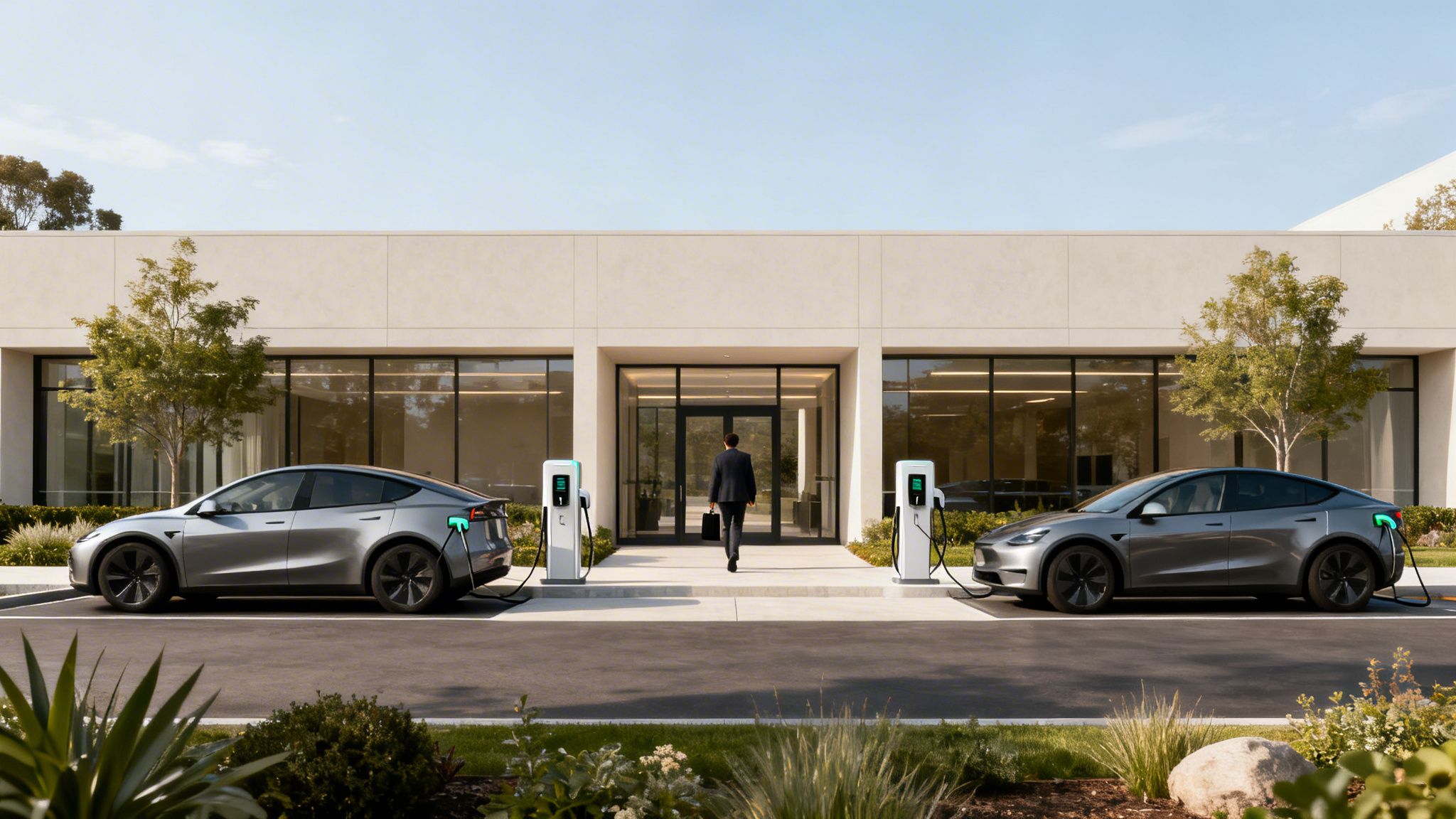
Installing commercial EV charging isn't about chasing a trend; it's a strategic decision to secure your property's relevance for the future. As EV adoption skyrockets across Australia, properties without charging facilities are going to be left behind. It's not an expense—it's a competitive advantage that prepares you for the inevitable electric transition.
This infrastructure acts as a magnet for a growing and valuable demographic. EV drivers actively plan their trips around locations with convenient charging, whether that's a shopping centre, hotel, workplace, or apartment building.
Attract High-Value Customers And Talent
By offering on-site charging, you instantly make your business a priority destination for EV owners. For retailers, this can mean longer dwell times and increased spending. For commercial landlords, it's a powerful selling point to secure and retain high-quality tenants.
It’s also a game-changer in a tight job market. Offering workplace charging is a tangible perk that helps attract and keep top talent, demonstrating a commitment to supporting their sustainable choices. In fact, given that many EV drivers worry about charging safety, providing well-lit and secure stations can really set your property apart.
Offering EV charging signals to customers, tenants, and employees that your business is modern, sustainable, and invested in the future. It’s a tangible amenity that directly influences where people choose to shop, work, and live.
Boost Property Value And Demonstrate Sustainability
The benefits go well beyond attracting people to your site. Installing EV charging infrastructure can genuinely enhance your property's value, making it more appealing to investors who prioritise environmental, social, and governance (ESG) criteria. It’s a highly visible, practical way to prove your company’s green credentials.
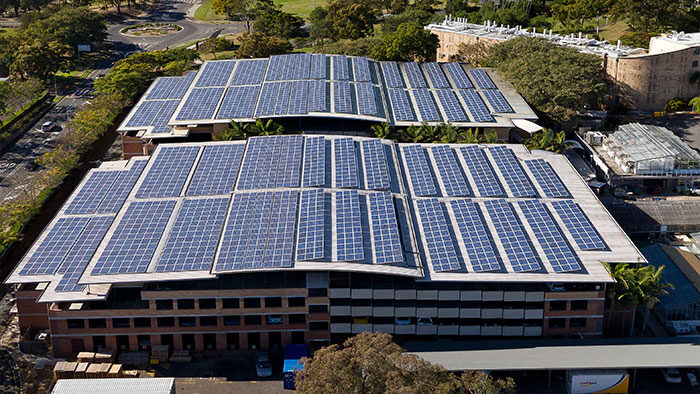
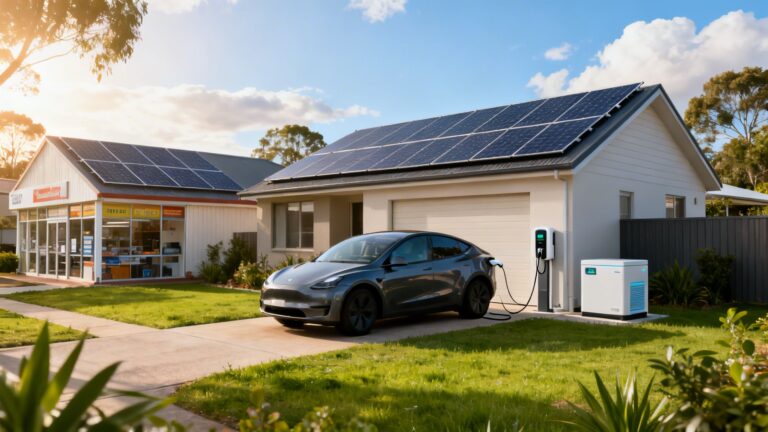
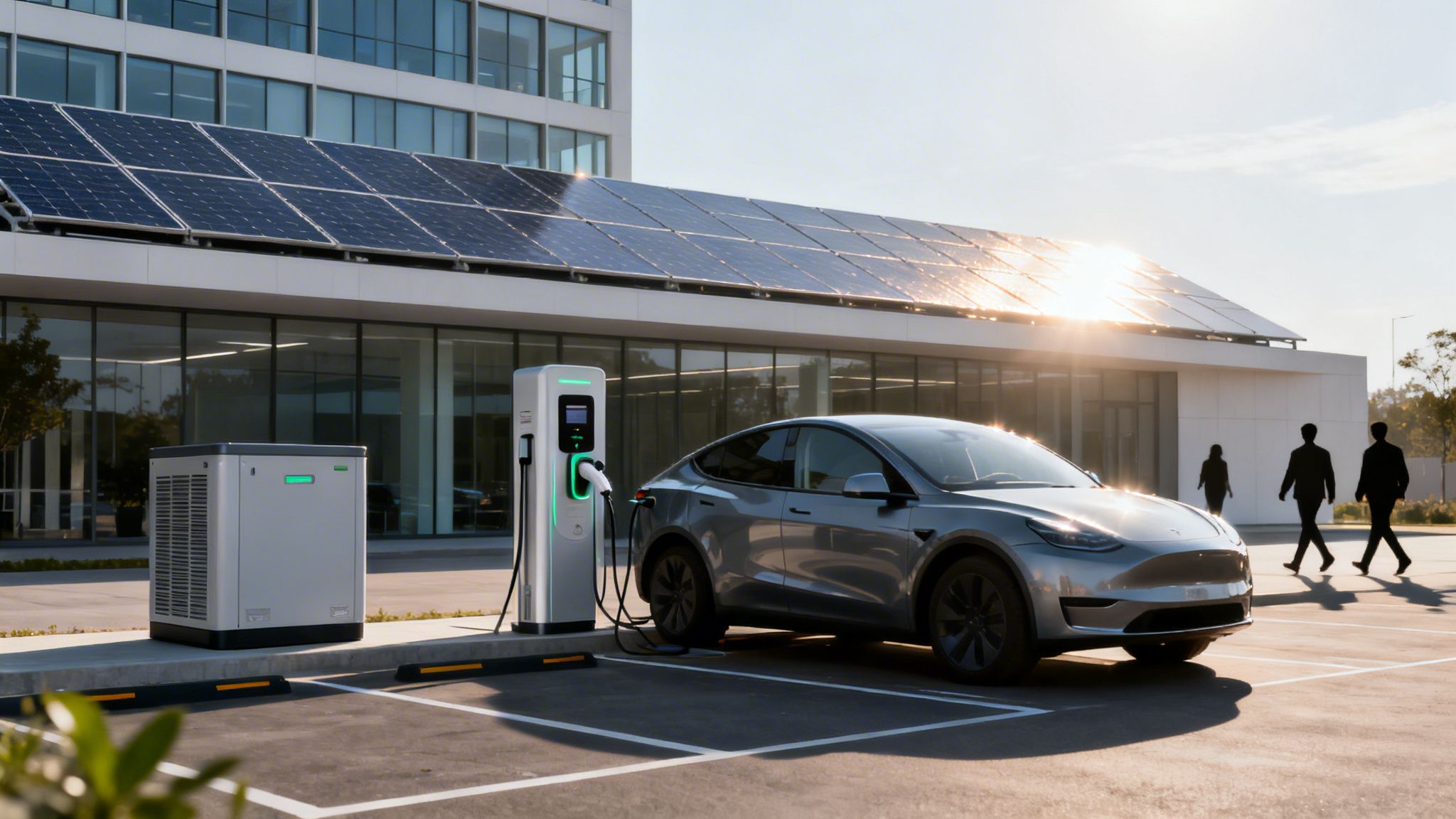
Think of it as the first step towards a complete energy solution. When you pair EV chargers with commercial solar and battery storage, you create a powerful, self-sufficient energy ecosystem. This setup allows you to generate your own clean power, slash operational costs, and insulate your business from unpredictable grid prices.
As you can see in our guide on rising electricity prices, taking control of your energy has never been more critical. This holistic approach doesn't just cut bills; it positions your business for long-term stability and growth in a rapidly changing energy market.
Choosing the Right Commercial EV Charger for Your Site
Picking the right hardware for your commercial EV setup can feel like a minefield, but it really boils down to two main types of chargers. Think of it like choosing between a standard garden tap and a high-pressure fire hose. Both deliver water, but at wildly different speeds and for totally different jobs. The same logic applies to EV chargers.
The big question you need to answer is: how long do vehicles usually park at your property? Are you catering for all-day parking where a slow, steady charge is perfect? Or do you need a quick "pit stop" solution for rapid turnover? Getting this right from the start is the key to a successful, well-used charging station.
AC Chargers: The 'All-Day Parking' Solution
Level 2 AC (Alternating Current) chargers are the workhorses of the commercial EV charging world. They're versatile, reliable, and perfectly suited for locations where vehicles will be parked for a few hours or more.
This makes them a no-brainer for:
- Workplaces: Employees can top up their batteries throughout the workday.
- Apartment Complexes and Strata: Residents can conveniently charge their cars overnight.
- Hotels and Resorts: Guests can wake up to a full battery during their stay.
- Long-stay Car Parks: A valuable perk for commuters and all-day visitors.
AC chargers work by feeding power from the grid to the car's onboard converter, which then turns it into DC power for the battery. This is a slower, gentler process, delivering between 7kW and 22kW of power. In real-world terms, that adds roughly 40 to 120 kilometres of range per hour, depending on the car and the charger's output.
Because they’re less demanding on your site's electrical capacity, AC chargers are typically simpler and more affordable to install. You can check out a range of powerful and reliable models in our comprehensive guide to EV chargers.
DC Fast Chargers: The 'Quick Pit Stop'
DC (Direct Current) Fast Chargers, often called DCFC, are the high-octane solution for commercial EV charging. These units bypass the car's internal converter entirely, pumping DC power straight into the battery. The result? Dramatically faster charging speeds.
This is the EV equivalent of a petrol station. A DC fast charger is built for one thing: getting drivers back on the road as quickly as possible.
DC Fast Chargers are a strategic move for sites that need to serve a high volume of EV drivers and can't have vehicles sitting around for hours. They can add hundreds of kilometres of range in well under an hour.
This high-speed capability is a game-changer for:
- Public Charging Hubs: Essential infrastructure along major transport routes.
- Retail Centres and Supermarkets: Shoppers can gain significant range during a quick grocery run.
- Fleet Depots: Keeps commercial vans and cars fully charged and ready for their next shift with almost no downtime.
DC fast chargers pack a serious punch, starting from 50kW and soaring past 350kW. But all that power comes with a catch: it demands a much beefier electrical connection and a more involved installation. While a small office in Sydney would be perfectly served by AC chargers, a large logistics hub in regional NSW would see a massive benefit from the sheer speed of DC fast charging.
To make the choice clearer, let’s break down the key differences between these two charger types.
AC vs DC Commercial EV Chargers At a Glance
| Feature | Level 2 AC Charger | DC Fast Charger (DCFC) |
|---|---|---|
| Power Output | 7kW – 22kW | 50kW – 350kW+ |
| Charging Speed | 40-120 km of range per hour | 150-500+ km of range per hour |
| Ideal Use Case | Long-dwell parking (workplaces, hotels, apartments) | Quick turnover sites (retail, public hubs, fleets) |
| How it Works | Uses the car's onboard charger to convert AC to DC | Bypasses the car's onboard charger to supply DC directly |
| Installation | Simpler, lower impact, less demanding on the grid | More complex, higher impact, requires substantial electrical capacity |
Ultimately, AC chargers are about providing a valuable amenity for longer stays, while DC chargers are about delivering a high-speed service that attracts drivers on the move.
Your Commercial EV Charger Installation Roadmap
So, you’ve decided on the right hardware. Now what? Getting your commercial EV charging project from a decision on paper to a live, working reality needs a clear, methodical plan. It’s a lot like building a house—you wouldn't start digging trenches without a detailed blueprint.
A successful installation follows a similar path, moving from an initial site check to the final sign-off. This is where partnering with an experienced provider really shows its worth. Juggling electrical upgrades, civil works, and network setups can get complicated, fast. With the right roadmap, you can sidestep nasty surprises and get your chargers up and running smoothly.
The Critical First Step: Professional Site Assessment
Before a single tool comes out, a professional site assessment is non-negotiable. This is where we uncover the unique quirks and opportunities of your property. It’s about way more than just picking a few parking spots; it’s a deep dive into your site’s electrical DNA.
A proper assessment looks at a few key things:
- Electrical Capacity: We check your main switchboard and look at your current power bills. The big question is: can your building actually handle the extra load from new EV chargers?
- Parking Layouts: We find the most logical and convenient spots for the chargers, thinking about traffic flow, accessibility, and making sure they’re easy to see and use.
- Usage Patterns: We talk about your goals. Who will be charging? Employees during the day? Customers popping in and out? A dedicated fleet overnight? The answers shape the entire system design.
A meticulous site audit is the single most important factor in preventing costly oversights. Underestimating your grid connection needs or sticking chargers in the wrong places can lead to expensive rework, project delays, and a terrible user experience.
Getting this right from the start ensures the system we propose is a perfect fit for both your property and your business goals.
System Design and Hardware Selection
With all the data from the site audit, we move into system design. This is where we work with you to map out a charging solution that’s built for your needs. We'll help you pick the right mix of chargers—maybe that’s a bank of AC units for all-day workplace charging or a powerful DC fast charger for quick turnaround.
This infographic breaks down the selection process, visually comparing the journey for both AC and DC chargers.
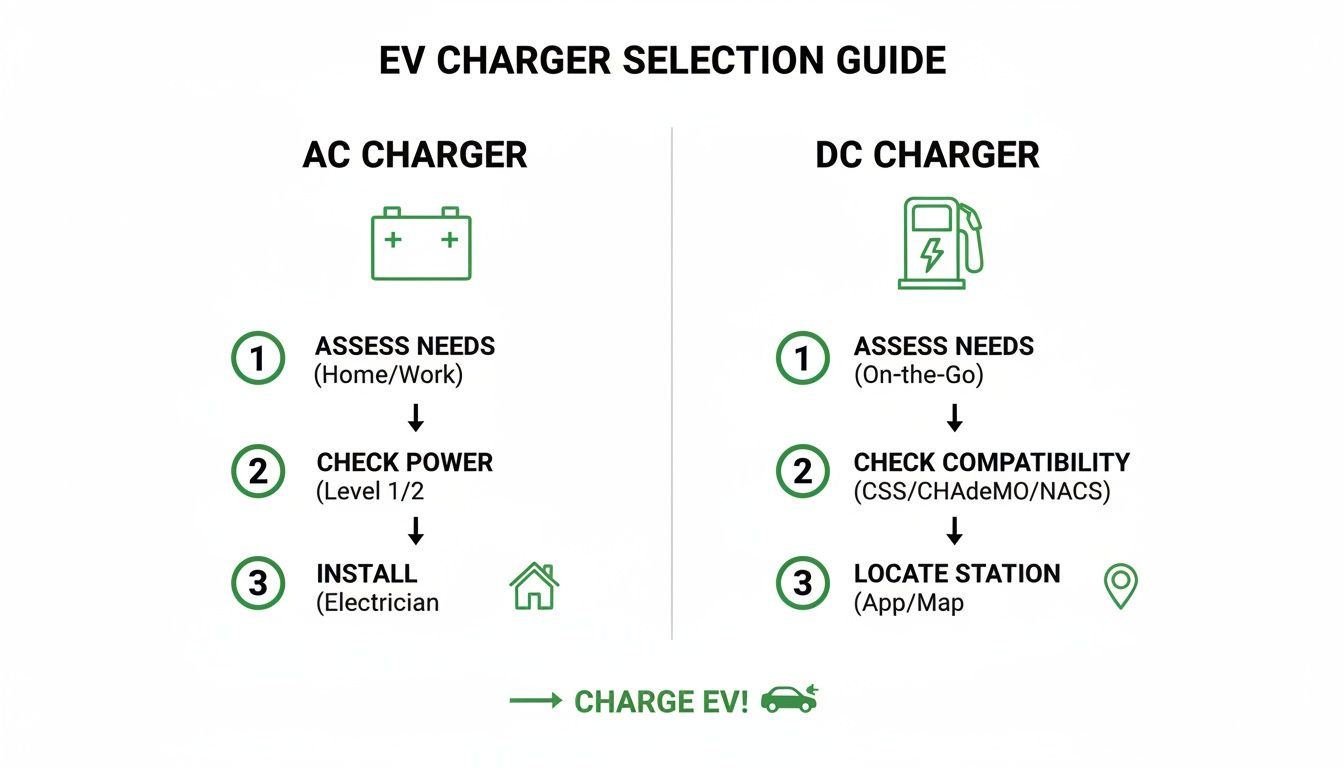
As the guide shows, the choice between AC and DC really comes down to how the chargers will be used—from long-dwell parking to high-speed public access.
Our design process also maps out the entire electrical backbone, from switchboard upgrades to cabling routes. To make sure your setup is truly future-proof, it's smart to think beyond today's needs and plan for expansion. A big part of this stage is figuring out how to get power to the chargers, and a key piece of the puzzle is mastering underground utility trenching for electrical lines to safely and efficiently prepare the ground.
The Installation and Commissioning Process
Once the design is locked in and approved, the physical work begins. This is where expertise and a sharp eye for detail are absolutely critical, turning the blueprint into a real, working asset. At Interactive Solar, our in-house, licensed electricians handle the whole process to make sure every detail is spot on.
The installation roadmap usually breaks down into these steps:
- Civil and Electrical Works: This is the groundwork. It can involve trenching, pouring concrete pads for the chargers, and running conduits for the wiring from the switchboard.
- Charger Installation and Wiring: The charging units are physically mounted and hooked up to the power supply. Our team ensures every connection is secure and weatherproof.
- Network and Software Configuration: For smart chargers, this is where they come alive. We connect them to the network, set up payment systems, and configure the management software for monitoring and load balancing.
- Commissioning and Certification: The final step is testing. We rigorously test every single charger to make sure it’s running correctly and safely. We then hand over all the necessary compliance certificates, giving you a fully functional and certified commercial EV charging system.
For a closer look at why professional execution makes all the difference, you can learn more about how we guarantee quality installations on every project we touch. A turnkey approach from an experienced provider makes the journey from idea to reality a seamless, hassle-free one.
Unlock Maximum ROI with Solar and Battery Integration
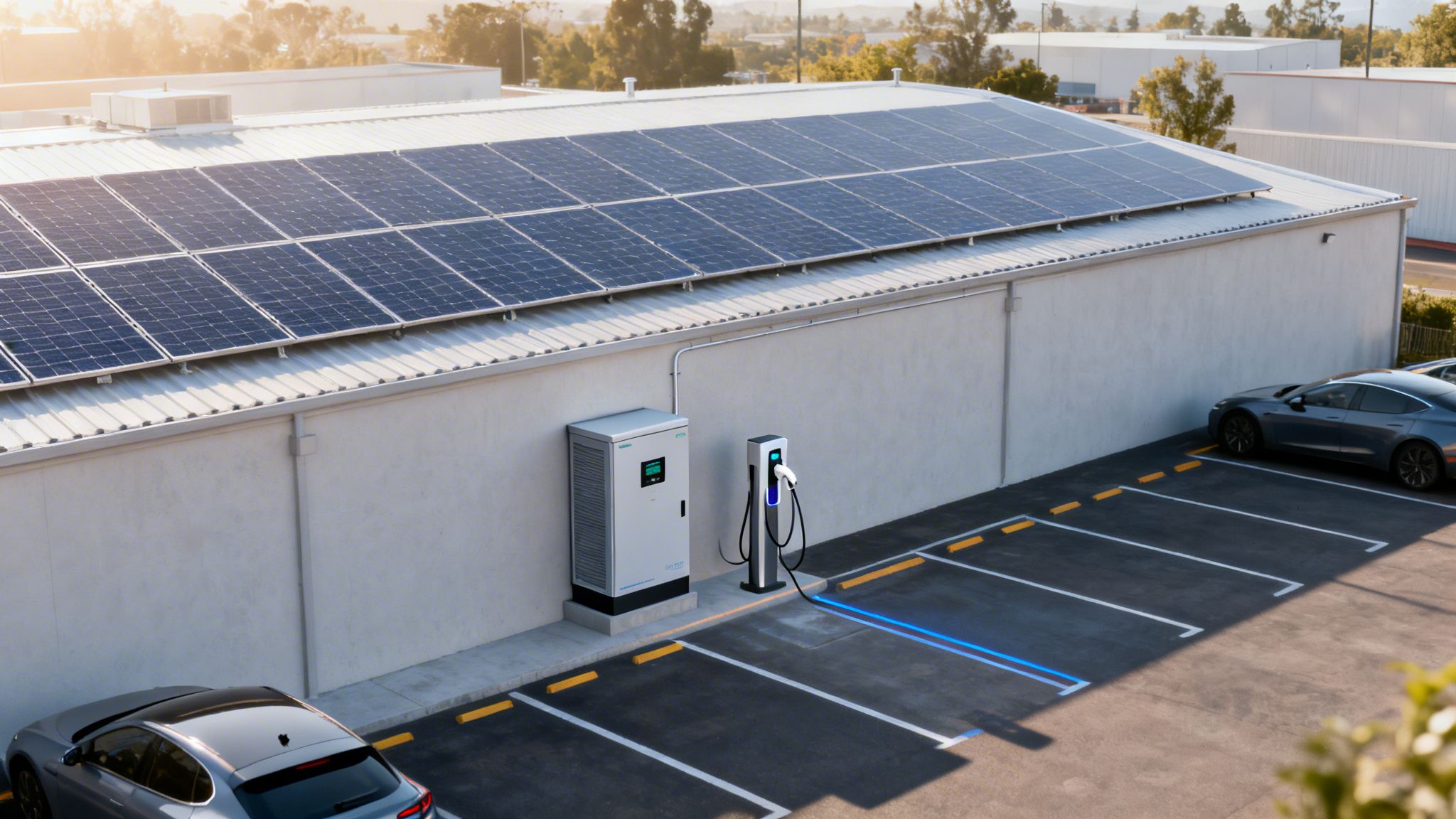
A commercial EV charging station is much more than just a new amenity; it’s a powerful financial asset waiting to be unlocked. By pairing your chargers with solar panels and commercial battery storage, you can create a complete energy ecosystem that actually pays for itself.
This isn't just about adding a perk for customers. It’s about transforming your charging infrastructure from a grid-dependent cost into a profitable, self-sufficient operation.
Imagine producing your own clean, free ‘fuel’ right from your rooftop. That’s exactly what solar integration does. Your commercial solar panels generate electricity all day, which can directly power your EV chargers and slash your reliance on expensive grid power.
This synergy doesn’t just drastically reduce the running costs of your commercial EV charging network; it also sends a powerful message about your business’s commitment to sustainability. That’s a factor that resonates deeply with modern customers and employees alike.
Powering Your Chargers Day and Night
But what happens after the sun goes down or on cloudy days? This is where a commercial solar battery becomes essential. Think of it like an energy bank, storing all the excess solar power your panels generate during peak sunlight hours.
Instead of exporting that valuable energy back to the grid for a pittance, you can save it for later. This stored energy can then power your EV chargers after sunset, during overcast weather, or—most strategically—during expensive peak tariff periods.
This gives you an incredible level of control over your energy costs. You’re no longer at the mercy of the grid’s volatile pricing.
By combining solar generation with battery storage, businesses can potentially offset a significant portion of their grid reliance for EV charging. This transforms a standard amenity into a highly resilient and profitable piece of business infrastructure.
This level of energy independence doesn’t just save you money—it protects your operations from grid instability and rising electricity prices. You’re essentially creating your own private, clean-energy fuel station. To get a better handle on choosing the right storage, you can explore our comprehensive battery comparison guide.
Creating a Smart Energy Ecosystem
Putting it all together, you get a complete, intelligent energy ecosystem that actively works to maximise your return. The solar panels produce the power, the battery stores it for the most opportune moment, and the EV chargers deliver it to vehicles, all while keeping your reliance on the grid to an absolute minimum.
This strategy is gaining traction right as Australia’s charging network is booming. For businesses, this highlights a golden opportunity to install destination chargers and pair them with solar PV, radically cutting operational costs.
To truly squeeze every drop of value from your investment, especially when integrating renewables, it’s worth looking into a robust building and energy management system. These systems give you sophisticated control over how and when energy is used across your entire property, ensuring your solar and battery assets are always working for your bottom line.
By creating this complete energy solution, you not only future-proof your property but also attract a premium demographic and build a brand-new, sustainable revenue stream.
Funding Your Project and Managing Your Network
Let's get straight to the questions that come with any big investment: how can I fund this, and how will I manage it? An EV charging project is more than just hardware. It’s about building a manageable asset that pays off.
The good news is, a mix of smart technology and government support makes this more achievable than you might think.
Your total project investment comes down to a few key things: the type of chargers you choose (AC vs. DC), how many you need, and the complexity of any electrical upgrades. A proper site assessment is the only way to get a truly clear picture of these factors.
Navigating Project Investment and Government Incentives
First, it helps to understand the market you're stepping into. The Australian EV charging scene is set to explode, and this growth is being driven by huge government support and strategic network expansions. Why? Because over half of all motorists still see a lack of chargers as a major hurdle to going electric. You can read more about this explosive growth in this in-depth analysis from grandviewresearch.com.
To close that gap, Australian governments are offering grants and incentives that can seriously reduce your upfront investment. These programs are a clear signal of federal and state commitment. These initiatives make it much easier for businesses like yours to invest in quality commercial EV charging infrastructure.
Choosing Your Business Model
Once your chargers are installed, you don’t have to give away electricity for free—unless, of course, that’s part of your plan. You’ve got a flexible asset on your hands, and you can manage it in a few different ways.
Here are your main options:
- Free Charging as a Perk: Offer complimentary charging to draw in customers, reward your staff, or keep your tenants happy. It’s a powerful amenity that makes your property stand out.
- Cost Recovery: Set your pricing to cover electricity and operational costs. This makes the service budget-neutral while still providing a valuable perk.
- Revenue Generation: Turn your chargers into a brand-new revenue stream. This approach treats your charging station as a profitable, standalone part of your business.
The right business model comes down to your goals. Whether you're aiming for customer loyalty, covering running costs, or generating profit, modern charging systems give you the flexibility to make it happen.
The Power of Smart Charger Networks
The key to all of this—managing users, setting prices, and actually running a business model—is a network of 'smart' chargers. These aren't just plugs on a wall. They're intelligent, connected devices that give you total command over your charging setup.
Smart chargers connect to a central software platform, which lets you:
- Control User Access: You decide who can charge and when. Is it open to the public, for employees only, or just for specific tenants? You set the rules.
- Set Custom Pricing: Easily roll out your chosen business model. Bill by the kilowatt-hour (kWh), by the minute, or with a flat session fee.
- Monitor Usage Remotely: Keep an eye on energy consumption, see which stations are busy, and collect data to fine-tune your operations from anywhere.
- Perform Load Management: This is a big one. You can intelligently spread the available power across all active chargers, preventing you from tripping the breakers or overloading your building’s electrical system.
This level of control turns your charging station from a simple utility into a dynamic asset you can actively manage. It even opens the door to more advanced grid services, like demand response programs. To get a better sense of how these networked assets can work with the broader grid, check out our deep dive into Virtual Power Plants in Australia.
Common Questions About Commercial EV Charging
When you start looking into commercial EV charging, the questions come thick and fast. It’s a new landscape for many property owners and business managers. Based on our hands-on experience installing these systems, we’ve put together straight answers to the queries that come up time and time again.
How Do I Know if My Building Has Enough Electrical Capacity?
This is almost always the first—and most important—question we get. The only real way to answer it is with a professional site audit. There’s no substitute for getting a licensed electrician to physically inspect your main switchboard and get a clear picture of your building’s current electrical load.
We start by analysing your recent energy bills to see your usage patterns. From there, we calculate the extra demand the EV chargers will add to the system. This isn't guesswork; it's a data-driven process.
If it looks like capacity is tight, that doesn't kill the project. Far from it. We can install smart load management systems that cleverly juggle power between the chargers, or we can simply plan for a switchboard upgrade. Our team handles this entire assessment to give you a recommendation that’s safe, compliant, and built to last.
Can I Generate Revenue from My EV Chargers?
Absolutely. Offering free charging is a great way to attract customers or reward staff, but turning your chargers into a revenue stream is becoming a very popular strategy. It's the most direct way to get a return on your investment.
Modern networked chargers give you total control over how you bill users. You can set pricing to match your business goals, with options to bill:
- Per kilowatt-hour (kWh), so drivers only pay for the exact amount of energy they use.
- Per hour, a great way to encourage drivers to move their car once it's fully charged.
- A flat session fee, which keeps transactions simple and predictable.
This flexibility means you can do anything from simply covering your electricity bill to generating a healthy profit. We can help you put together a system with easy payment processing and clear revenue tracking that fits your location, your users, and what you want to achieve.
The right strategy depends entirely on what you want to achieve. Whether it's driving loyalty, breaking even, or creating profit, the technology exists to make it happen easily.
What Kind of Maintenance Do Commercial EV Chargers Need?
Commercial-grade chargers are built to be tough and handle public use, but just like any important asset, they need a bit of upkeep to perform at their best and last for years. Consistent maintenance is the key to keeping your chargers online and ensuring users have a good experience every time.
Typically, maintenance involves a few key things:
- Annual inspections by a qualified electrician to check all the wiring and connections.
- Regular software and firmware updates to keep the system secure, compatible with new EVs, and running smoothly on the network.
- Physical cleaning and checking for any visible wear and tear on the cables, plugs, or housing.
One of the biggest perks of "smart" networked chargers is that most of the health checks and troubleshooting can be done remotely. Our team can often spot and fix a problem before a driver even notices it. Working with an installer who offers solid after-care support is vital for protecting your investment and keeping downtime to an absolute minimum.
Ready to answer your own questions about bringing commercial EV charging to your property? The expert team at Interactive Solar provides turnkey solutions, from initial site assessment and system design to certified installation and ongoing support. Contact us today to schedule your consultation.